

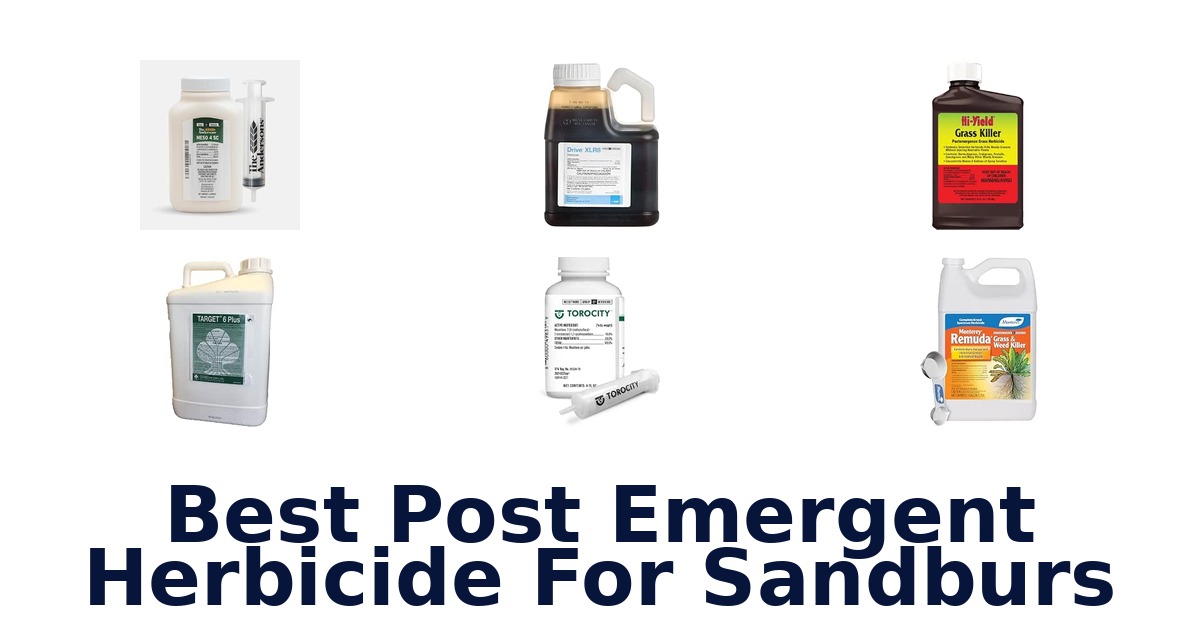
A strong candidate for sandburs should target emerged grassy weeds while fitting the intended turf; this comparison suits lawn owners choosing among post-emergent concentrates, granules, and nonselective treatments. None of the supplied product details explicitly names sandbur, so treat the rankings as a shortlist by stated grassy-weed activity—not confirmation that a product controls sandbur. BASF Drive XLR8 leads because its details specify post-emergent grassy-weed control for lawn and turf, with quinclorac and up to 30 days of residual control.
Mesotrione concentrates also offer pre- and post-emergent grassy-weed activity, while other options are limited to different weed categories, settings, or broader vegetation control. Always verify the product label permits the target weed and your turf before applying.
BASF Drive XLR8 is the leading option in this group because its supplied details specifically describe post-emergent grassy-weed control for lawn and turf, name quinclorac as the active ingredient, and state up to 30 days of residual control. However, the product data does not confirm sandbur control. Check the current label for sandbur, your turf species, application directions, and restrictions before use; do not assume that crabgrass or general grass activity guarantees control of sandburs.
Our Top Picks

Its details explicitly specify post-emergent grassy-weed control for lawn and turf, quinclorac, rainfastness under an hour, and up to 30 days of residual control.
View on Amazon Dual-Action Pick
Contains 40.0% mesotrione and is described for pre- and post-emergent grassy and broadleaf weed control in newly seeded and established lawns.
View on Amazon Seed-Compatible Option
Its listed targets include grassy weeds and crabgrass, and the product is described for pre- and post-emergent use, including seeding with a fine-fescue exception.
View on Amazon- Warm-Season Turf Envu Celsius WG
Compare the Options and Their Stated Uses
| # | Product | Form | Weight | Buy |
|---|---|---|---|---|
| 1 | 1. BASF Drive XLR8Best Overall | Liquid | 4.2 lb | View on Amazon |
| 2 | 2. Atticus Torocity MesotrioneDual-Action Pick | Liquid | 8 oz | View on Amazon |
| 3 | 3. The Andersons Meso 4 SCSeed-Compatible Option | Liquid | — | View on Amazon |
| 4 | 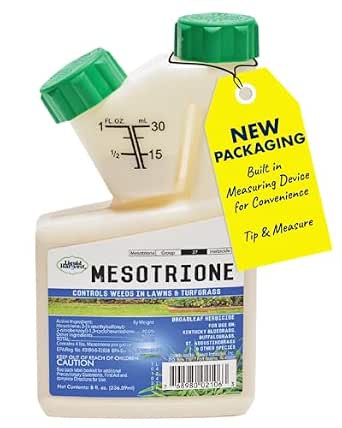 4. Liquid Harvest MesotrioneMesotrione with broad grass fit | Liquid | 8 oz | View on Amazon |
| 5 |  5. Envu Celsius WGWarm-Season Turf | Powder | 18.14 g | View on Amazon |
| 6 |  6. Target 6 Plus MSMAProfessional MSMA applications | Liquid | — | View on Amazon |
| 7 |  7. Hi-Yield Grass KillerSelective grass control near gardens | Liquid | 8 oz | View on Amazon |
| 8 |  8. The Andersons Surge Weed and FeedEstablished lawns needing feed | Granule | 40 lb | View on Amazon |
| 9 |  9. Monterey RemudaNon-selective vegetation control | Liquid | 8 lb | View on Amazon |
Detailed Reviews: Best Post Emergent Herbicide For Sandburs
#1 · Best Overall
1. BASF Drive XLR8
- Form: Liquid
- Weight: 4.2 lb
Best for: Rainfast residual crabgrass control.
Why it ranks #1: Its details explicitly specify post-emergent grassy-weed control for lawn and turf, quinclorac, rainfastness under an hour, and up to 30 days of residual control.
A water-based quinclorac concentrate pairs faster plant uptake with rainfastness in less than an hour, helping applications fit around changing weather. BASF also lists up to 30 days of residual control, a useful feature for lawn managers seeking longer-lasting control of crabgrass and other listed weeds.
The liquid concentrate’s water-based formulation is described as supporting faster plant uptake, while rainfastness in less than an hour can reduce the time an application must remain undisturbed by rain. Its up-to-30-day residual control may also reduce how often repeat applications are needed. The listing identifies crabgrass and broadleaf weed control, but does not name sandburs, so buyers should rely on the label for target-specific guidance rather than assume sandbur efficacy.
- Water-based formulation supports faster plant uptake
- Rainfast in less than an hour
- Up to 30 days of residual control
- Quinclorac concentrate targets crabgrass and broadleaf weeds
- The listing does not specifically identify sandburs among its controlled weeds.
Skip it if you need a product listing that explicitly names sandburs; this listing identifies crabgrass and broadleaf weeds instead.
A lawn manager looking for a liquid quinclorac concentrate, quick rainfastness, and residual control may find this a practical fit. Its listed targets do not specifically include sandburs, so verify that use against the product label.
Full product details
| Brand | BASF |
|---|---|
| Included Components | 1 bottle |
| Item Form | Liquid |
| Item Weight | 4.2 pounds |
| Manufacturer | BASF |
| Model Number | AMDRIVEXLR |
Listed on Amazon as: BASF Drive XLR8 Crabgrass Killer for Lawn & Turf, Post Emergent Grassy & Broadleaf Weed Control, Active Ingredient Quinclorac, 30 Day Residual, Herbicide, Concentrate 64 Ounce
View on Amazon#2 · Dual-Action Pick
2. Atticus Torocity Mesotrione
- Form: Liquid
- Weight: 8 oz
Best for: Measuring-syringe mesotrione.
Why it ranks #2: Contains 40.0% mesotrione and is described for pre- and post-emergent grassy and broadleaf weed control in newly seeded and established lawns.
Torocity pairs 40.0% mesotrione with an included pre-marked syringe, helping users measure concentrate for pre- or post-emergent lawn treatments. The listing describes use on both newly seeded and established turf, offering timing flexibility across lawn stages while keeping the active ingredient and measuring tool clearly identified.
Its pre- and post-emergent activity lets users address weeds before emergence or after they appear, while the stated use on newly seeded and established turf extends the listed lawn-stage fit. The included pre-marked syringe supports measuring the concentrate, which can make preparation more straightforward. The product contains 40.0% mesotrione; the supplied facts do not name sandburs or specify a sandbur rate, so check the complete label for target and turf directions.
- 40.0% mesotrione
- Pre- and post-emergent activity
- Listed for newly seeded and established turf
- Includes a pre-marked measuring syringe
- The supplied product facts do not specifically name sandburs as a target.
Skip it if you need a listed sandbur target and rate; BASF Drive XLR8 at least names crabgrass, though it also does not name sandburs.
Torocity may suit lawn owners wanting mesotrione across new seeding and established-turf situations, with a syringe for measuring concentrate. Its supplied details do not specify sandbur control, so use the full label to confirm targets and directions.
Full product details
| Brand | Atticus |
|---|---|
| Included Components | 8oz Bottle of Torocity |
| Item Form | Liquid |
| Item Weight | 8 ounces |
| Manufacturer | Atticus |
| Model Number | 520115 |
Listed on Amazon as: Atticus Torocity Mesotrione Herbicide (8oz) – (Compare to Tenacity)
View on Amazon#3 · Seed-Compatible Option
3. The Andersons Meso 4 SC
- Form: Liquid
Best for: Mesotrione for seeding lawns.
Why it ranks #3: Its listed targets include grassy weeds and crabgrass, and the product is described for pre- and post-emergent use, including seeding with a fine-fescue exception.
Meso 4 SC combines pre- and post-emergent control with a stated fit for seeding or overseeding, allowing lawn owners to address existing weeds and prevent new growth while establishing grass. The listing names more than 50 common broadleaf and grassy weeds, including crabgrass, foxtail, clover, and nutsedge.
Its pre- and post-emergent activity addresses both weeds that have appeared and those still to emerge, while the seeding and overseeding compatibility supports lawn-renewal workflows. The stated exception is fine fescue, an important turf boundary for seed plans. A bottle and syringe are included, and the listed weed range exceeds 50 common broadleaf and grassy weeds; sandbur is not among the supplied examples, so check the label for that target.
- Pre- and post-emergent weed control
- Listed for use when seeding or overseeding
- Controls more than 50 common broadleaf and grassy weeds
- Includes a syringe
- Seeding or overseeding use has an exception for fine fescue.
Skip it if you are seeding fine fescue; the product listing specifically excludes that grass from its seeding compatibility.
This mesotrione option may fit homeowners overseeding a lawn who want both pre- and post-emergent control and a syringe for application preparation. Fine fescue is excluded from the seeding claim, and sandbur-specific use needs label confirmation.
Full product details
| Brand | The Andersons |
|---|---|
| Included Components | 1 Bottle & 1 Syringe |
| Item Form | Liquid |
| Manufacturer | Prime Source |
Listed on Amazon as: The Andersons Meso 4 SC – Mesotrione Pre-Emergent and Post-Emergent Weed Control 8 fl. oz.
View on Amazon#4
4. Liquid Harvest Mesotrione
- Form: Liquid
- Weight: 8 oz
Best for: Mesotrione with broad grass fit.
Why it ranks #4: The listing describes pre- and post-emergent control across 46 broadleaf species and grasses, including crabgrass, but does not identify sandbur.
This mesotrione concentrate targets 46 broadleaf species and grasses, with crabgrass and barnyard grass among the examples, and is listed for both pre- and post-emergent use. That combination gives lawn owners a flexible weed-control option across several named turf types, though full weed death may take two to three weeks.
The liquid mesotrione begins absorbing upon application, while the stated two-to-three-week period to full weed death sets expectations for visible results. Water activation is another key workflow requirement: if rainfall does not occur within 10 days, the listing calls for 0.15 inches of water. Its named turf options include Kentucky bluegrass, centipede grass, buffalo grass, and tall fescue, so check the complete label for compatibility and sandbur directions.
- Pre- and post-emergent use
- Targets 46 broadleaf species and grasses
- Crabgrass and barnyard grass are named targets
- Lists multiple suitable turf types
- Water activation is required; without rain within 10 days, apply 0.15 inches of water.
Skip it if you cannot provide activation water when rainfall is absent; BASF Drive XLR8 is listed as rainfast in under an hour.
Choose this concentrate if you want mesotrione with pre- and post-emergent use across named lawn grasses and can plan for activation water. Its stated full-control timeline is two to three weeks, and sandbur use needs label confirmation.
Full product details
| Brand | Liquid Harvest |
|---|---|
| Included Components | Weed Killer |
| Item Form | Liquid |
| Item Weight | 8 ounces |
| Manufacturer | Sanco Industries |
| Model Number | 02106 |
Listed on Amazon as: Liquid Harvest Mesotrione – 8oz – Mesotrione Concentrate (Compare to Tenacity) – Pre and Post-Emergent Weed Killer for Lawn and Turf Grasses
View on Amazon#5 · Warm-Season Turf
5. Envu Celsius WG
- Form: Powder
- Weight: 18.14 g
Best for: Warm-season turf weed control.
Why it ranks #5: Its three active ingredients target more than 120 weeds in warm-season turf, including grasses, though the supplied details do not name sandbur.
Celsius WG combines three active ingredients in a postemergent foliar-applied powder for broad-spectrum weed control in warm-season turf. Its listing says it controls more than 120 annual and perennial broadleaf weeds and grasses, making it a candidate for turf managers treating mixed weed pressure rather than a single named species.
The easy-mix packet and powder form provide a measured, compact format for preparing a spray, while the included product label supports application reference. The formulation is identified as foliar-applied and postemergent, so its role is treating weeds after they appear. Its stated fit is warm-season turf, including St. Augustinegrass and Bermudagrass; the listing does not establish sandbur-specific control, so check the label for that target and turf compatibility.
- Three active ingredients
- Postemergent foliar application
- Controls more than 120 annual and perennial broadleaf weeds and grasses
- Identifies warm-season turf such as St. Augustinegrass and Bermudagrass
- Its stated turf fit centers on warm-season grasses.
Skip it if you maintain cool-season turf; Liquid Harvest Mesotrione lists Kentucky bluegrass and tall fescue among suitable grasses.
Turf managers treating broad weed pressure in listed warm-season grasses may appreciate this postemergent powder and its easy-mix packet. Confirm the label’s turf and weed directions before use, especially when sandbur control is the specific goal.
Full product details
| Brand | Envu |
|---|---|
| Included Components | Easy Mix Packet, Product Label |
| Item Form | Powder |
| Item Weight | 18.14 g |
| Manufacturer | Bayer |
| Model Number | 87309096 |
Listed on Amazon as: Prime Source Celsius WG – 0.226 oz Easy Mix Packet-Post Emerge Weed Control
View on Amazon#6
6. Target 6 Plus MSMA
- Form: Liquid
Best for: Professional MSMA applications.
Why it ranks #6: The post-emergent description lists crabgrass and several other grasses, but its stated settings are cotton, golf courses, sod farms, and highway rights of way.
Target 6 Plus contains 48.3% MSMA and lists use on golf courses, sod farms, cotton, and highway rights of way. Its post-emergent target list includes crabgrass, dallisgrass, johnsongrass, nutsedge, pigweed, and chickweed, making it a specialized option for users working within those labeled settings.
The liquid MSMA concentrate is listed for mixing at two ounces per gallon of water for general applications, with label directions governing rates for particular weeds. That makes label consultation central to planning a treatment, especially because the listing warns that MSMA can be dangerous if improperly used. Its stated settings include golf courses, sod farms, cotton, and highway rights of way; the supplied facts do not establish sandbur control or broad home-lawn suitability.
- Contains 48.3% MSMA
- Post-emergent control includes crabgrass and several other named weeds
- Lists golf courses and sod farms among use settings
- Provides a general mixing rate of two ounces per gallon
- The listing warns MSMA can be dangerous if improperly used.
Skip it if you need a home-lawn product with a stated sandbur target; this listing does not identify sandburs or broad home-lawn use.
This concentrate is for buyers whose work matches its listed settings and who can follow the label’s weed-specific directions carefully. Its stated targets include crabgrass, but sandbur control is not established in the supplied information.
Full product details
| Brand | LUXEMBOURG- PAMOL |
|---|---|
| Item Form | Liquid |
| Manufacturer | LUXEMBOURG- PAMOL |
| Model Number | Ti98029 |
Listed on Amazon as: Target 6 Plus (MSMA 48.2%) Turf Herbicide – (2.5 Gallon jugs)
View on Amazon#7
7. Hi-Yield Grass Killer
- Form: Liquid
- Weight: 8 oz
Best for: Selective grass control near gardens.
Why it ranks #7: This selective post-emergent product targets grass growth and can be used around gardens and ornamentals; the details do not establish use on lawn sandburs.
Hi-Yield Grass Killer selectively targets grass growth and is listed for use around vegetables, gardens, trees, shrubs, and ornamentals. Its concentrate makes eight gallons of spray solution, giving gardeners a way to treat unwanted grasses around named plantings without choosing a non-selective vegetation killer.
The selective post-emergent action focuses on grass growth, making the listed garden and ornamental settings central to its fit. The product states that weed-grass growth stops two days after application, a specific point of reference for treatment expectations. Its eight-ounce liquid concentrate makes eight gallons of spray solution, while application varies by area and method; follow the label for directions and do not assume it controls sandbur based solely on its grass target.
- Selective post-emergent grass control
- Listed for use around vegetables and gardens
- Also listed for trees, shrubs, and ornamentals
- Eight-ounce concentrate makes eight gallons of spray solution
- Targets grass growth, not the broadleaf weeds also listed for some other products.
Skip it if you need a product specifically listing sandburs or broadleaf weeds; BASF Drive XLR8 lists crabgrass and broadleaf weed control.
Gardeners targeting unwanted grasses around listed vegetables, shrubs, trees, or ornamentals may value its selective focus and stated spray yield. Check the label for the exact grass and planting directions, since sandbur is not specifically named.
Full product details
| Brand | Hi-Yield |
|---|---|
| Included Components | Grass Killer Postemergence Grass Herbicide |
| Item Form | Liquid |
| Item Weight | 8 ounces |
| Manufacturer | VPG |
| Model Number | 31134 |
| Additional Information | Important Information Proposition 65 Warning for California Consumers WARNING: Cancer and Reproductive Harm – www.P65Warnings.ca.gov |
Listed on Amazon as: Hi-Yield (31134) Grass Killer Postemergence Grass Herbicide, 8 oz
View on Amazon#8
8. The Andersons Surge Weed and Feed
- Form: Granule
- Weight: 40 lb
Best for: Established lawns needing feed.
Why it ranks #8: It controls more than 250 weeds, but the supplied examples are broadleaf weeds and its listing does not specify sandbur or grassy-weed control.
Surge combines post-emergent weed control with 16-0-9 fertilizer, letting established-lawn users address broadleaf weeds while feeding turf in one granular application. The four-way formula lists more than 250 common weeds and small particles for coverage, but it is explicitly not for several turf types, including Floratam St. Augustinegrass.
The granular weed-and-feed format links two lawn tasks: controlling actively growing broadleaf weeds and supplying fertilizer to help build a thicker, greener lawn. Small particles are described as providing more coverage per square inch, and the product is listed for performance through the growing season, including cooler spring and fall conditions. Application guidance calls for a damp lawn so granules stick to weed leaves; the product is not for Floratam St. Augustinegrass, dichondra, carpetgrass, or creeping bentgrass.
- Combines post-emergent weed control and 16-0-9 fertilizer
- Lists control of more than 250 common weeds
- Small particles provide more coverage per square inch
- Can be applied in cooler spring and fall conditions
- Not for Floratam St. Augustinegrass, dichondra, carpetgrass, or creeping bentgrass.
Skip it if you have Floratam St. Augustinegrass, dichondra, carpetgrass, or creeping bentgrass; choose a product labeled for your turf.
This granular weed-and-feed may suit owners of established lawns who want fertilizer and broadleaf control together. Apply to damp turf as directed, and avoid it on the specifically excluded grasses and other listed turf types.
Full product details
| Brand | The Andersons |
|---|---|
| Item Form | Granule |
| Item Weight | 40 pounds |
Listed on Amazon as: The Andersons Professional Surge Weed and Feed 16-0-9 Post-Emergent Weed Control and Fertilizer – Covers up to 16,000 sq ft (40 lb)
View on Amazon#9
9. Monterey Remuda
- Form: Liquid
- Weight: 8 lb
Best for: Non-selective vegetation control.
Why it ranks #9: This 41% glyphosate product is non-selective and kills grasses as well as broadleaf weeds, making it a poor fit for treating sandburs in desirable lawn turf.
Remuda is a 41% glyphosate, non-selective post-emergent concentrate with surfactant, targeting annual and perennial grasses as well as many broadleaf weeds. That broad action fits vegetation management in actively growing, unplanted areas, but it is not a selective lawn treatment that spares desirable grass.
The non-selective formulation is the key planning consideration: it is listed to kill both grass and broadleaf weeds, including crabgrass, clover, creeping charlie, and poison ivy. Its post-emergent use is specified for active growth in unplanted areas, which suits clearing unwanted vegetation rather than treating weeds within desirable turf. The 41% glyphosate concentrate includes surfactant; take care to avoid contact with plants meant to remain, and follow label directions.
- 41% glyphosate concentrate
- Non-selective control of annual and perennial grasses
- Targets many broadleaf weeds as well as grasses
- Post-emergent use during active growth in unplanted areas
- Non-selective action can kill desirable grass as well as weeds.
Skip it if you need to preserve lawn grass while treating weeds; Hi-Yield Grass Killer is selective for grass growth around listed garden plants.
Remuda fits vegetation management in unplanted areas where broad, non-selective post-emergent control is appropriate. It is not the choice for selectively removing sandburs from a lawn while preserving the surrounding desirable grass.
Full product details
| Brand | Monterey |
|---|---|
| Included Components | No |
| Item Form | Liquid |
| Item Weight | 8 pounds |
| Manufacturer | Monterey |
| Model Number | LG 5190 |
Why a grass-killing label may not settle sandbur control
A general claim for grassy weeds does not, by itself, confirm control of sandbur. The supplied details name crabgrass for BASF Drive XLR8 and several other grasses for Target 6 Plus MSMA, but none explicitly lists sandbur. Sandbur identification and label coverage therefore matter more than broad phrases such as grassy-weed control.
A second failure mode is treating a lawn with a non-selective product: Monterey Remuda is described as killing annual and perennial grasses, so it may damage desirable grass along with the target. Before buying or spraying, confirm the target weed, turf species, application site, rate, and any repeat-treatment limits on the current label.
If sandbur or your lawn type is not covered, do not infer permission from a similar weed or from a product’s general-purpose description.
Match the treatment to the site, not just the weed
The site determines whether a candidate is appropriate: lawn-selective turf use and non-selective vegetation management are not interchangeable. BASF Drive XLR8 is presented for lawn and turf, while Monterey Remuda is explicitly non-selective and described for vegetation management and ornamental weed control. Target 6 Plus MSMA lists cotton, golf courses, sod farms, and highway rights of way, so its stated use settings differ from an ordinary home lawn.
Product form also changes handling: most of these options are liquids, while Envu Celsius WG and The Andersons Surge Weed and Feed are powders or granules. Do not substitute a familiar mix rate or application method across products.
Check the exact label for site eligibility, turf tolerance, protective measures, and directions; the listing’s general descriptions do not supply enough detail to safely determine those conditions for every sandbur situation.
How to Choose a Sandbur Treatment
Target weed confirmation
Look for a label that expressly covers sandbur rather than relying on a general grassy-weed claim. In this set, BASF Drive XLR8 is described for grassy weeds and lawn turf, while Liquid Harvest Mesotrione covers 46 broadleaf species and grasses and The Andersons Meso 4 SC lists more than 50 common weeds, including crabgrass. Those details show breadth, not verified sandbur control.
Check the label’s exact target list before purchase and use; also confirm whether the weed’s growth stage and your site are covered. A buyer who needs confirmed sandbur control should choose only a product whose current label lists it.
If the label does not, seek a correctly labeled alternative rather than extrapolating from crabgrass or other grass claims.
Turf selectivity and treatment site
Prioritize a product whose label permits use on your lawn species and application site. BASF Drive XLR8 is presented for lawn and turf, and Envu Celsius WG describes use in warm-season turf such as St. Augustinegrass and Bermudagrass.
By contrast, Monterey Remuda is non-selective and kills grasses, while Target 6 Plus MSMA lists settings including cotton, golf courses, sod farms, and highway rights of way. Those differences are decisive: a lawn owner should favour a label-approved selective option, while a non-selective product is not a substitute for turf-safe treatment.
Buyers managing a non-lawn site should still verify that the specific site and weed are allowed. The product descriptions alone do not establish compatibility with every turf species.
Formulation and application demands
Choose a formulation you can apply exactly as its label directs, and do not transfer rates between products. The listings include liquid concentrates such as BASF Drive XLR8, 8-ounce mesotrione products, a 1-gallon glyphosate concentrate, a powder packet of Envu Celsius WG, and a 40-pound granular weed-and-feed. BASF states rainfastness in less than an hour and up to 30 days of residual control; the mesotrione listing from Liquid Harvest says activation requires water and gives a 0.15-inch watering direction if no rain occurs within 10 days.
These are product-specific details, not universal rules. Buyers wanting a spray concentrate should compare label mixing and equipment requirements; buyers considering granules should check whether the label permits their target and site.
Which Herbicide Should I Choose for Sandburs?
Start with the label: none of these supplied descriptions explicitly confirms sandbur control, so select only a product whose current label names sandbur and your treatment site. If you are shortlisting by stated grassy-weed activity for lawn turf, BASF Drive XLR8 is the strongest match because it specifically describes post-emergent grassy-weed control for lawn and turf, plus up to 30 days of residual control. For a pre- and post-emergent mesotrione option, consider Atticus Torocity Mesotrione or The Andersons Meso 4 SC, while checking their labels for your turf and target.
Envu Celsius WG is described for warm-season turf. Avoid Monterey Remuda on desirable lawn grass: its non-selective glyphosate formulation kills grasses.
Do not infer sandbur coverage from crabgrass or broad grassy-weed claims.
Frequently Asked Questions
Does the product label list sandbur and my specific turfgrass as approved targets?
Check the current label for both sandbur and your specific turfgrass before choosing or applying a product. None of the supplied product descriptions explicitly confirms sandbur control, and a claim for crabgrass or general grassy weeds does not establish that sandburs are covered.
When should I apply a post-emergent herbicide to actively growing sandburs?
Apply only when sandburs are actively growing and the product label permits treatment at that growth stage. Follow its directions for timing, conditions, repeat applications, and any restrictions. The supplied descriptions do not establish a sandbur-specific application window, so do not rely on a general grassy-weed claim for timing.
How can I avoid injuring desirable turf when treating sandburs?
Use only a product whose current label approves both sandbur and your turf species, then follow its application rate, directions, and restrictions. Do not assume a product is selective for your lawn because it targets grassy weeds. Avoid non-selective glyphosate products on desirable lawn grass, as they kill grasses.
Does a crabgrass or broad grassy-weed claim confirm sandbur control?
No. A crabgrass or general grassy-weed claim does not confirm that sandbur is a listed target. Check the current label for sandbur, your treatment site, and your turf species.
The supplied descriptions do not explicitly confirm sandbur control, so do not infer coverage from those broader claims.
Can I use Monterey Remuda on desirable lawn grass?
No. The supplied description identifies Monterey Remuda as a non-selective glyphosate herbicide, and the editorial guidance warns that it kills grasses. Do not use it on desirable lawn grass.
For turf treatment, choose only a product whose current label approves the target weed and your specific turf.
Final Words
Start with the current label: none of these supplied descriptions explicitly confirms sandbur control, so choose only a product that lists sandbur and your turf species. For stated post-emergent grassy-weed activity on lawn and turf, BASF Drive XLR8 is the strongest match in this group, but that does not establish sandbur efficacy. Check all directions and restrictions, and avoid non-selective Monterey Remuda on desirable lawn grass.