

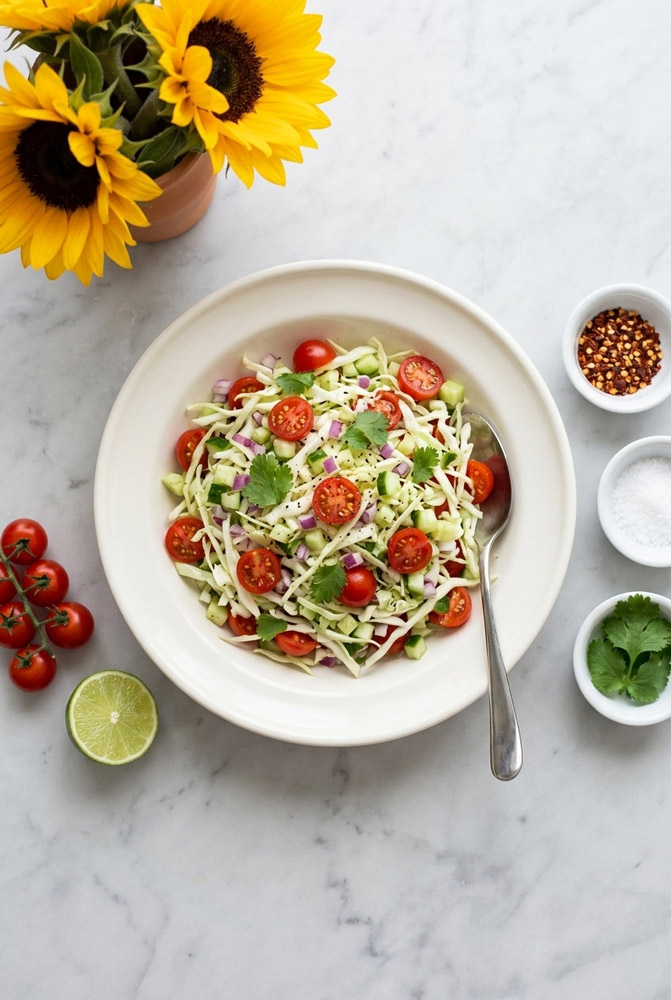
Crisp, piquant, and vibrantly acidic, traditional Mexican cabbage salsa occupies the flavorful space between classic pico de gallo and zesty slaw. Born out of bustling taquerías and seaside stands across Mexico—from the coastal fish taco carts of Ensenada to the open-air rotisseries of Sinaloa—salsa de repollo serves an essential purpose: cutting straight through rich, unctuous proteins with bright citrus and a satisfying crunch. While traditional tomato salsas release water quickly and lose their bite, cabbage maintains its structural integrity, delivering a refreshing snap with every bite.
Acid Matrix
- Lime Juice
- Olive Oil (opt)
- Salt + Pepper
Aromatic Lift
- Red Onion
- Fresh Cilantro
Hydration & Heat
- Diced Tomatoes
- Jalapeño / Serrano
- Crisp Cucumber
My introduction to this style of salsa happened at a small roadside taquería outside Ensenada. The cook did not serve a thin red sauce or a delicate pico; instead, a chilled stainless bowl brimmed with finely shredded green cabbage tossed with fresh lime, serrano chiles, and sweet Roma tomatoes was ladled generously over hot, battered fish.
The heat of the fryer met the cold snap of the citrus-dressed cabbage, creating a balance of temperatures, textures, and richness that redefined my approach to taco garnishes. This recipe captures that exact balance right in your home kitchen.
Planning & Kitchen Metrics
- Active Prep Time: 15 minutes
- Maceration Rest Time: 15 to 20 minutes
- Total Time: 35 minutes
- Yield: Approximately 4 cups (Serves 6 as a side, 8 to 10 as a taco topping)
- Culinary Difficulty: Beginner-friendly; focuses on basic knife work and seasoning balance
This salsa requires no stovetop, oven, or specialized food processor. A sharp 8-inch chef’s knife and a large wooden cutting board do the heavy lifting. If knife work feels slow, a standard mandoline slicer produces paper-thin cabbage threads in seconds (always use the safety hand guard).
For gatherings, you can easily double or triple the measurements without altering the ingredient ratios. If you are prepping ahead, slice the cabbage and dice the aromatics up to 24 hours in advance, keeping them sealed in separate airtight containers in the refrigerator. Combine and dress with the fresh lime juice, salt, and olive oil about 15 minutes before serving to achieve the ideal balance of crunch and tender flavor.
Ingredient Architecture & Sourcing
Every element in this salsa serves a structural, aromatic, or chemical purpose. Selecting fresh produce and prepping each item thoughtfully ensures bright, balanced results.
Green Cabbage
Green cabbage provides the sturdy foundation of this recipe. Unlike delicate iceberg or romaine lettuce, cabbage features dense, fibrous cell walls constructed of cellulose that resist the softening action of acidic citrus juice. Choose heads that feel compact, heavy for their size, and have tightly bound leaves free of dark blemishes.
Substitutions: Savoy cabbage yields a tender, ruffle-textured bite, while red cabbage introduces an eye-catching magenta hue (though it will bleed into the cucumber and onions after a few hours). Napa cabbage is too delicate for extended maceration, but works well if eaten immediately.
Roma or Cherry Tomatoes
Firm, meaty tomatoes are essential. Plum or Roma tomatoes are the standard choice because their lower moisture content and dense walls keep the salsa from turning soupy. If you choose cherry or grape tomatoes, slice them across their equator into thin halves or quarters; their natural sweetness offers a nice counterpoint to the sharp chiles.
Preparation Tip: Scoop out and discard the wet, gelatinous seed cavities of whole Roma tomatoes before dicing to keep the texture clean and crisp.
Red Onion
Red onion supplies a sharp sulfur bite and crisp snap, along with bright color contrast. As the diced onion sits in the citrus juice, the lime’s citric acid reacts with anthocyanin pigments in the onion, turning them a bright magenta while mellowing their harsh bite.
Alternative: White onion provides a sharper, authentic Mexican street-taco profile, while thinly sliced scallions offer a gentler green-allium flavor.
Fresh Jalapeño or Serrano Chiles
Jalapeños deliver approachable heat with sweet vegetable notes, while slender serrano chiles pack a sharper, punchier bite.
Adjusting Heat: Capsaicin lives predominantly within the pale interior placenta and ribs of the chile, not the seeds themselves. Scrape out the interior ribs with a paring knife for clean pepper flavor without intense heat; leave the white membranes intact if you want authentic heat.
Persian or English Cucumber
Cucumbers add cooling hydration and clean aroma. Thin-skinned Persian or seedless English cucumbers are best because their skins are tender and bitter-free, making peeling unnecessary.
Preparation Tip: If standard waxed garden cucumbers are all that’s available, peel them thoroughly and scrape out the watery interior seed channel with a spoon before dicing to avoid excess liquid.
Fresh Cilantro
Cilantro brings a bright, grassy, herbal finish that ties all the fresh ingredients together. Wash your cilantro stems in cold water, shake dry, and chop both leaves and tender upper stems. The stems hold aromatic essential oils that release maximum flavor into the lime juice.
Fresh Lime Juice & Optional Extra Virgin Olive Oil
Bottled lime juice lacks the aromatic volatile oils found in fresh fruit. Always choose heavy, thin-skinned Persian limes that give slightly when pressed.
The half-tablespoon of extra virgin olive oil is optional, but highly recommended: the fat coats your palate, softening the lime juice’s sharp acid and carrying the fat-soluble capsaicin evenly across your taste buds for a rounder finish.
Step-by-Step Culinary Method
1. Prep the Cabbage
Peel away and discard the leathery outer two leaves of the cabbage head. Set the cabbage stem-down on a secure cutting board and slice it cleanly in half through the core. Cut the halves into quarters, then make an angled cut to remove the dense interior heart core from each wedge.
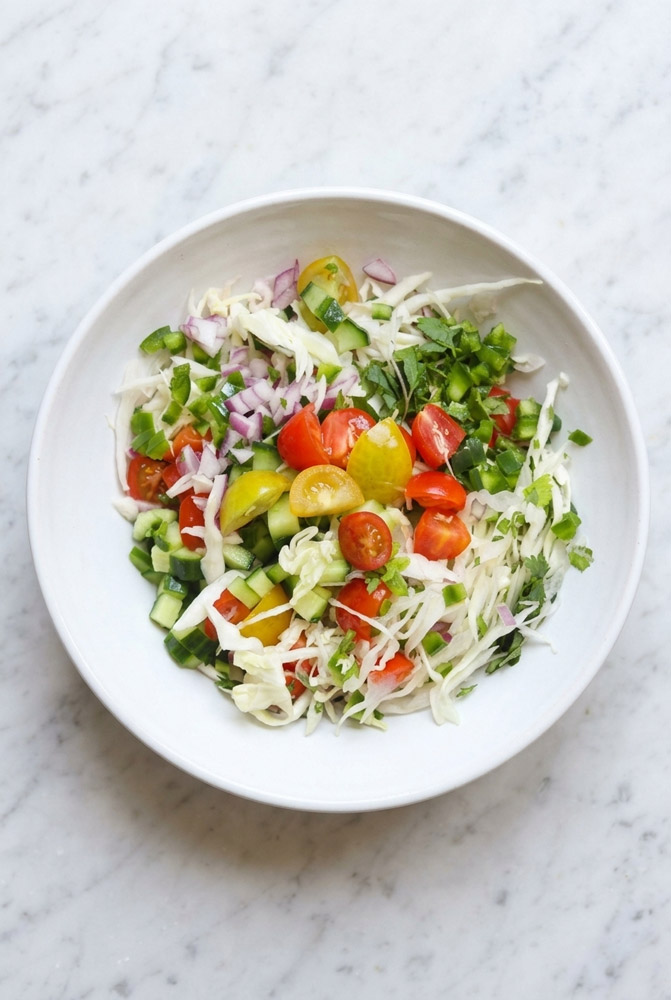
Lay each quarter flat side down and shave the cabbage crosswise into thin ribbons, no wider than an eighth of an inch. Fine ribbons absorb the lime dressing while retaining their pleasant crunch. Place the shredded cabbage into a large mixing bowl, breaking up any tight leaf clusters with your fingers.
2. Dice the Aromatics
Finely dice your red onion into clean quarter-inch pieces, matching the scale of the cabbage shreds. Halve your Roma tomatoes lengthwise, scrape out the watery seed pockets with your thumb, and cut the firm walls into uniform dice.
Slice your Persian cucumber into quarter-inch half-moons or dice to match the tomatoes. Split the jalapeño or serrano lengthwise, scrape out the ribs according to your preferred heat level, and mince the pepper finely so the spice disperses evenly throughout the salsa.
3. Chop the Cilantro
Gather your cleaned cilantro into a tight bundle on your cutting board. Using a sharp chef’s knife, work through the bunch in a single, smooth slicing motion.
Avoid rocking the blade back and forth repeatedly over the same spot, which bruises the delicate herbs and causes them to blacken on the board. Transfer the chopped cilantro, diced vegetables, and peppers directly into the bowl with the cabbage.
4. Season and Dress
Roll your whole limes firmly against your countertop with the palm of your hand to break the internal juice vesicles before slicing them in half. Squeeze the juice through a citrus squeezer over the bowl, catching any stray seeds.
Drizzle in the half-tablespoon of extra virgin olive oil, then sprinkle evenly with a half-teaspoon of fine sea salt and fresh black pepper.
5. Toss and Macerate
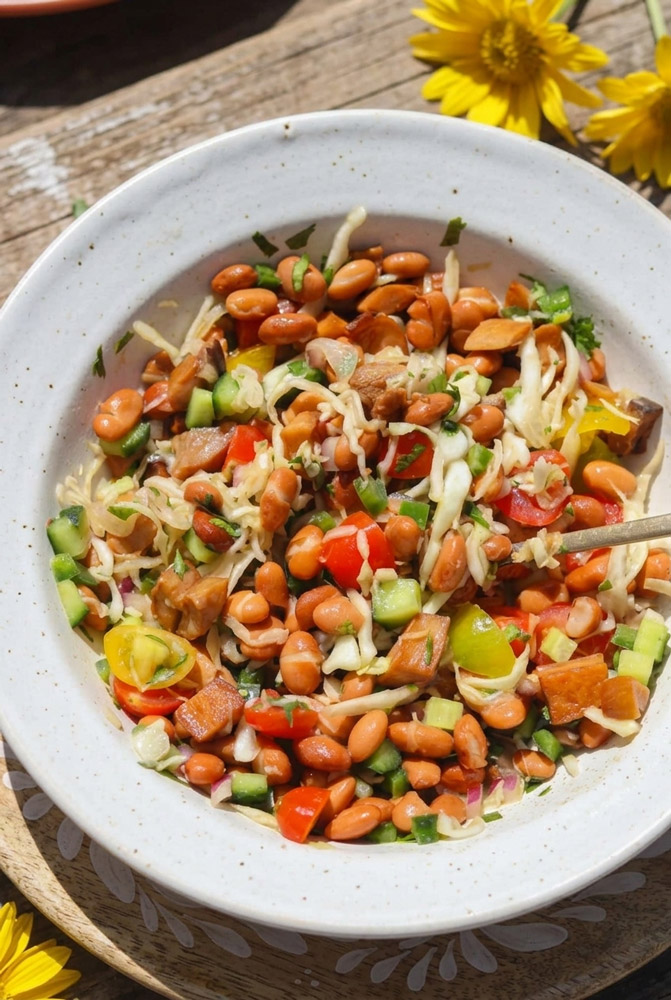
Using clean hands, wide salad tongs, or two large spoons, toss the ingredients from the bottom up until the shreds of cabbage gleam with lime juice and the colors are evenly distributed.
Let the mixture rest untouched at room temperature for 15 to 20 minutes. During this window, the salt draws out surface moisture while the lime juice lightly pickles the onions and tenderizes the cabbage ribbons.
6. Final Palate Calibration
Stir the salsa once more to bring settled juices up from the bottom of the bowl. Taste a full forkful containing both cabbage and tomato.
If the bite tastes flat or sharp, add another pinch of salt, which tempers the citrus acid and unlocks tomato sweetness. If the cabbage feels overly stiff, let it rest an additional five minutes. Serve immediately.
Variations & Customizations
- Baja Seafood Style: Whisk a tablespoon of clean avocado oil mayonnaise with fresh lime juice, an extra pinch of Mexican oregano, and a splash of pickle brine from a jar of escabeche jalapeños before tossing with the cabbage. This creates the classic creamy, tangy salsa served over crispy Baja fish tacos and grilled shrimp bowls.
- Tropical Fruit Accent: Fold in a half-cup of diced, firm-ripe mango, fresh pineapple, or papaya. The natural sugars balance the sharpness of serrano chiles, pairing naturally with blackened mahi-mahi or slow-roasted carnitas.
- Poblano Fire Char: Char a large poblano pepper over an open gas flame or under a hot broiler until the skin blackens. Steam it in a sealed bowl for ten minutes, wipe away the charred skin, seed it, and dice into strips. The smoky flavor rounds out the raw crunch of the cabbage.
- Pickled Brine Twist: Replace half of the fresh lime juice with brine from pickled jalapeños (chiles en vinagre). This introduces vinegar notes, garlic, and subtle hints of Mexican oregano.
Serving, Pairing & Storage Strategies
This versatile salsa pairs seamlessly across traditional Mexican menus:
- Taco & Tostada Garnish: Spoon it generously over slow-braised pork carnitas, shredded beef barbacoa, or grilled skirt steak. The acid cuts through rich fat, clearing the palate between bites.
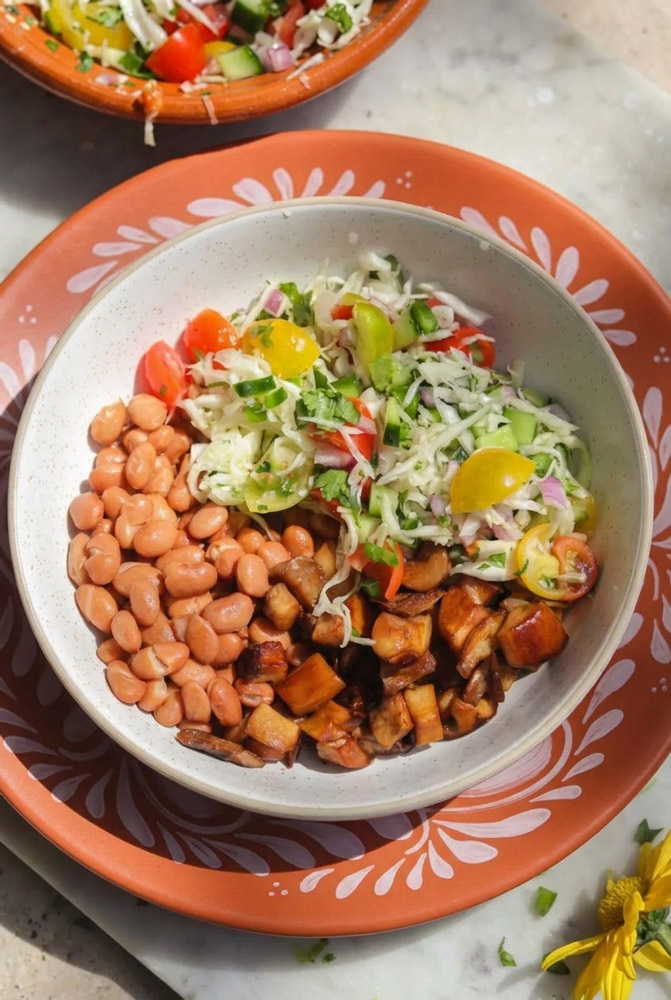
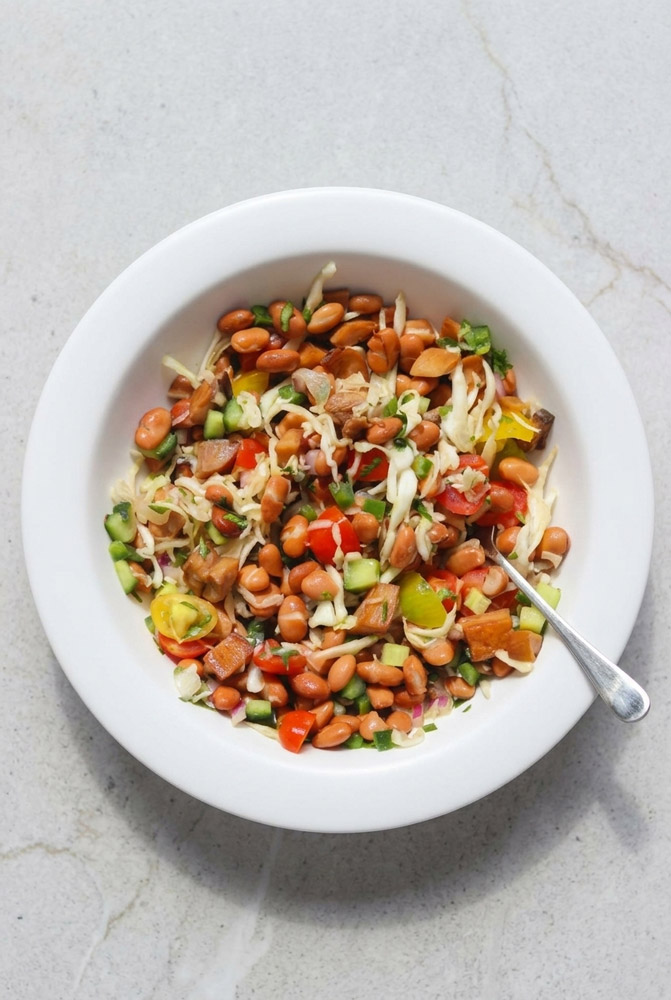
- Plant-Based Mains: Pair with grilled portobello mushroom asada or warm, earthy pinto beans (frijoles de la olla). The bright crunch balances rich, soft legumes.
- Beverage Pairings: Serve alongside a chilled Mexican lager garnished with lime, an earthy mezcal Paloma, or non-alcoholic Jamaica (hibiscus iced tea), whose tartness mirrors the fresh lime dressing.
Refrigerator Storage & Next-Day Revival
Store leftover salsa in a sealed glass container in the refrigerator for up to two days. Because salt draws out moisture, water will pool naturally in the bottom of the container.
Before serving leftovers, lift the salsa out with a slotted spoon to leave excess liquid behind, then refresh the dish with a fresh squeeze of lime juice, a small pinch of sea salt, and a sprinkle of freshly chopped cilantro to restore its vibrant crunch.