

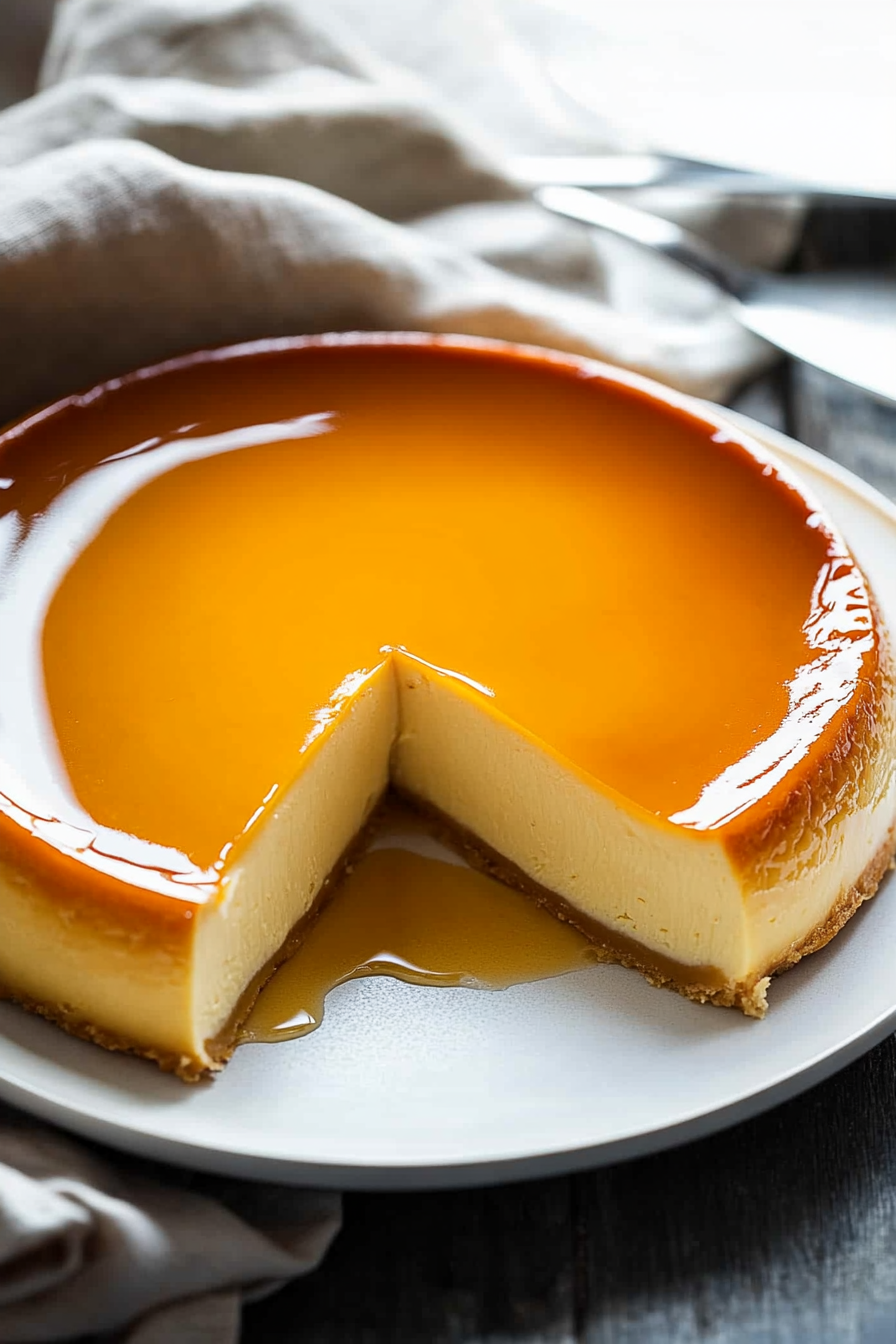
Flan has been around forever. Spanish kitchens. Latin American homes. Family gatherings. It’s known for that smooth custard and the dramatic caramel moment when you flip it over.
Flan de Queso takes things one step further.
The addition of cream cheese changes everything. The texture becomes richer. Slightly tangy. Almost like cheesecake—but lighter. Softer. Silkier.
This version leans into the Puerto Rican and Caribbean style of flan. That means condensed milk, evaporated milk, and a proper water bath. No shortcuts. What I love about this recipe is how simple it looks—but how rewarding it is if you slow down and pay attention.
And when you finally flip it over and see that caramel slide down the sides?
Worth it.
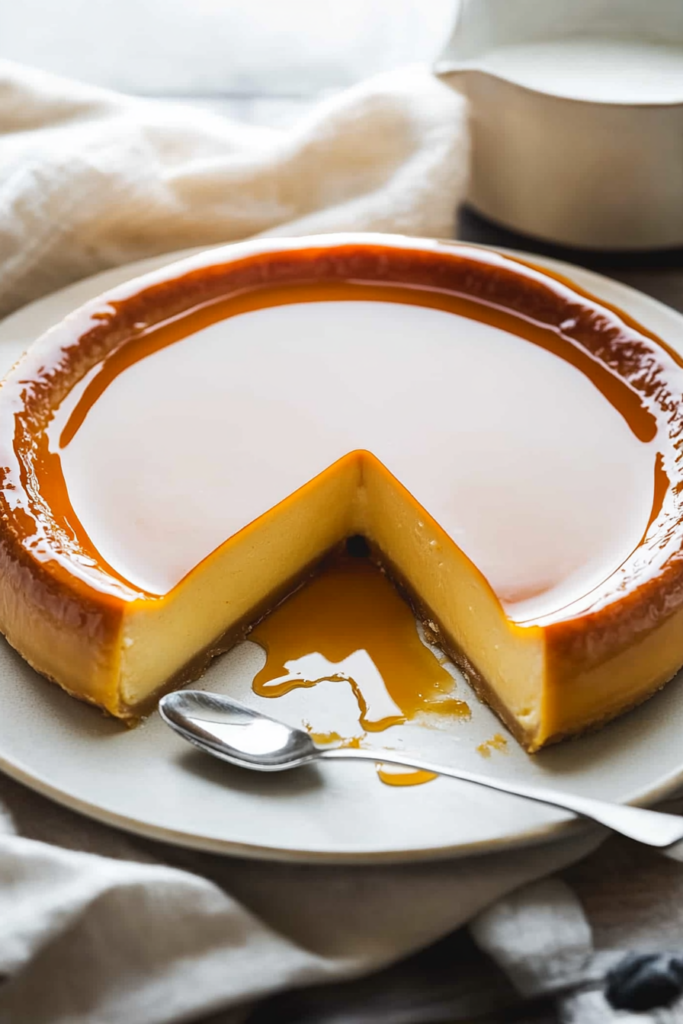
Recipe Overview
This is the kind of dessert that feels calm while you’re making it…
But looks impressive when you serve it.
Timing-wise, I spend about 15 minutes getting everything ready. The flan bakes for about an hour. After that, it just needs time to chill and set. All together, you’re looking at around 5 hours and 15 minutes, but most of that is hands-off.
Servings?
Eight generous slices from a 9-inch round pan. Feeding more people? Use a bigger pan and make sure the water bath still comes up the sides. Cooking for fewer? You can easily cut the recipe in half and use a loaf pan.
Difficulty level:
I’d call it medium—but very doable. Nothing complicated. Just a few moments where attention matters. Caramel. Baking time. That’s it.
Equipment-wise, a blender makes life easier. You’ll also need a saucepan, a round cake pan, foil, and something deep enough to hold the water bath. No roasting pan? No problem. Any deep baking dish works.
And yes—this is a make-ahead dessert. In fact, it’s better that way. Overnight in the fridge improves both flavor and texture.
Ingredients (and Why They Matter)
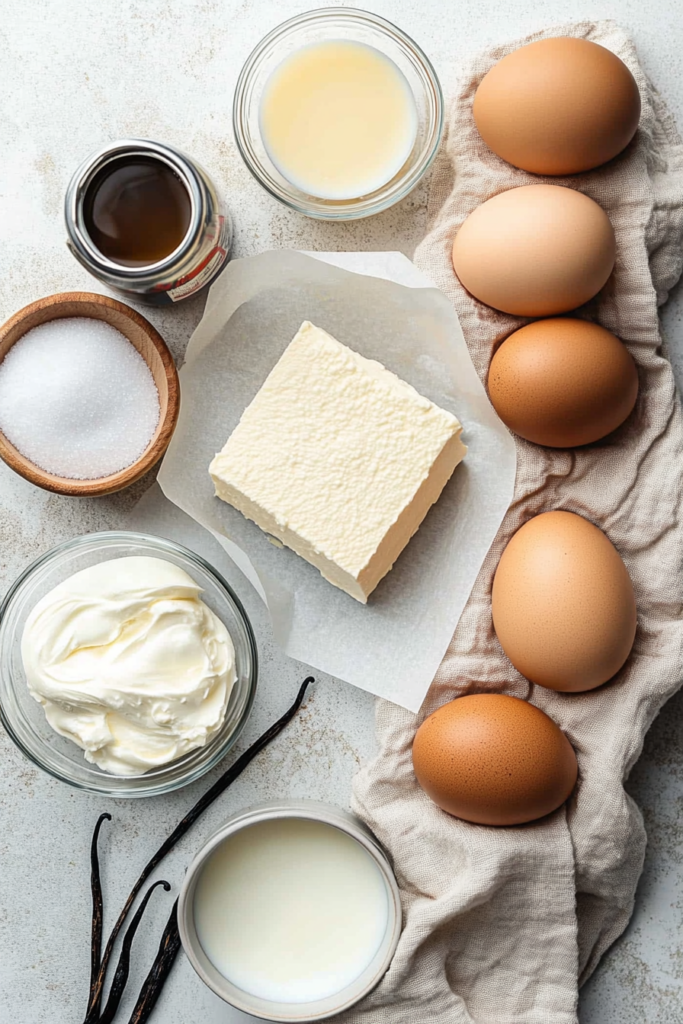
- This recipe is all about balance. Rich—but not heavy. Sweet—but not cloying.
- The granulated sugar is straightforward. No tricks. Just heat, patience, and transformation into caramel.
- Sweetened condensed milk does more than sweeten. It helps give the flan its dense, creamy structure. Since this recipe uses less added sugar, condensed milk keeps things smooth and balanced.
- Evaporated milk adds body without extra sweetness. Less water means better texture. Simple as that.
- Cream cheese is the star of the show. It brings creaminess and a gentle tang that sets this flan apart. I always let it come to room temperature—cold cream cheese loves to leave lumps behind.
- Eggs give the flan structure. Any standard large eggs work. The key? Don’t overbake. Eggs are patient… until they aren’t.
- A small amount of vanilla extract pulls everything together. Just a little. Too much and the flan starts to feel heavy.
- And then there’s boiling water. It doesn’t feel like an ingredient, but it’s essential. The water bath keeps the heat gentle and even. Without it, custard turns on you fast.
- If you need substitutions, lactose-free evaporated milk works well. But full-fat cream cheese really matters here. Low-fat versions just don’t behave the same.
Step-by-Step Method (Like We’re Cooking Together)
I always start by preheating the oven to 350°F. Custard likes consistency. Surprises? Not so much.
The caramel
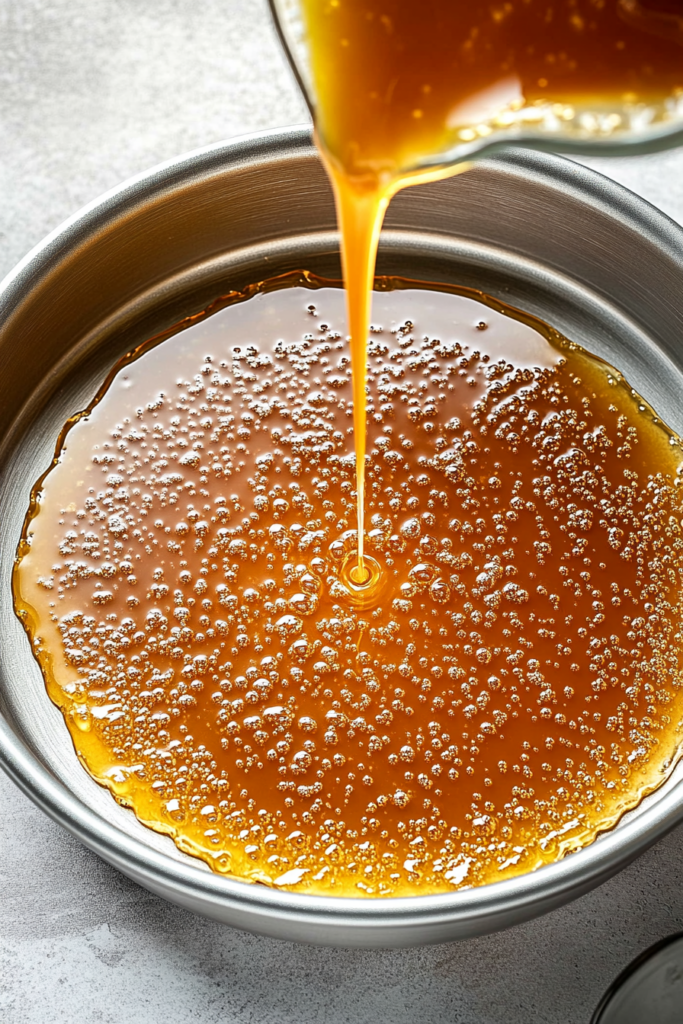
Sugar goes into the pan. Medium heat. Stirring patiently.
First it clumps. Looks wrong. Smells like nothing. Then—slowly—it melts. Turns amber. Smells warm and nutty. That’s your moment.
Once it hits a golden brown, move fast. Pour it into the pan. Tilt to coat the bottom. It hardens quickly, so don’t overthink it.
The flan base
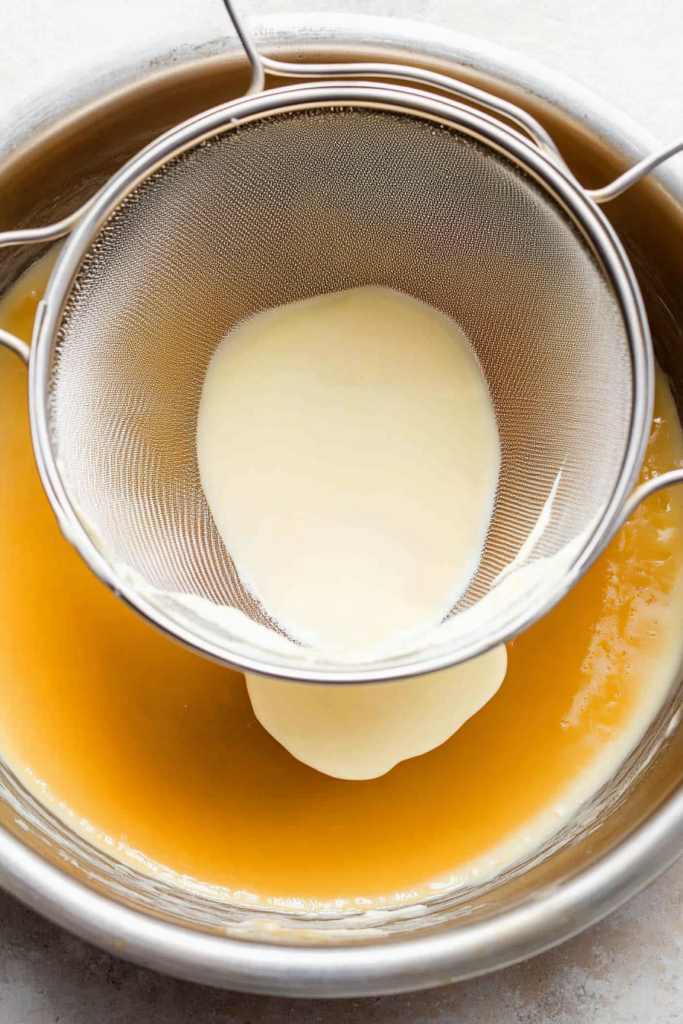
While the caramel sets, everything else goes into the blender. Condensed milk. Evaporated milk. Cream cheese. Eggs. Vanilla.
Blend until smooth. Glossy. No lumps. It should pour easily, almost like heavy cream. If it looks foamy, let it rest for a minute.
Straining the mixture might feel unnecessary—but it’s not. This step removes bubbles and stray bits. The result? That ultra-smooth texture everyone loves.
Baking Gently
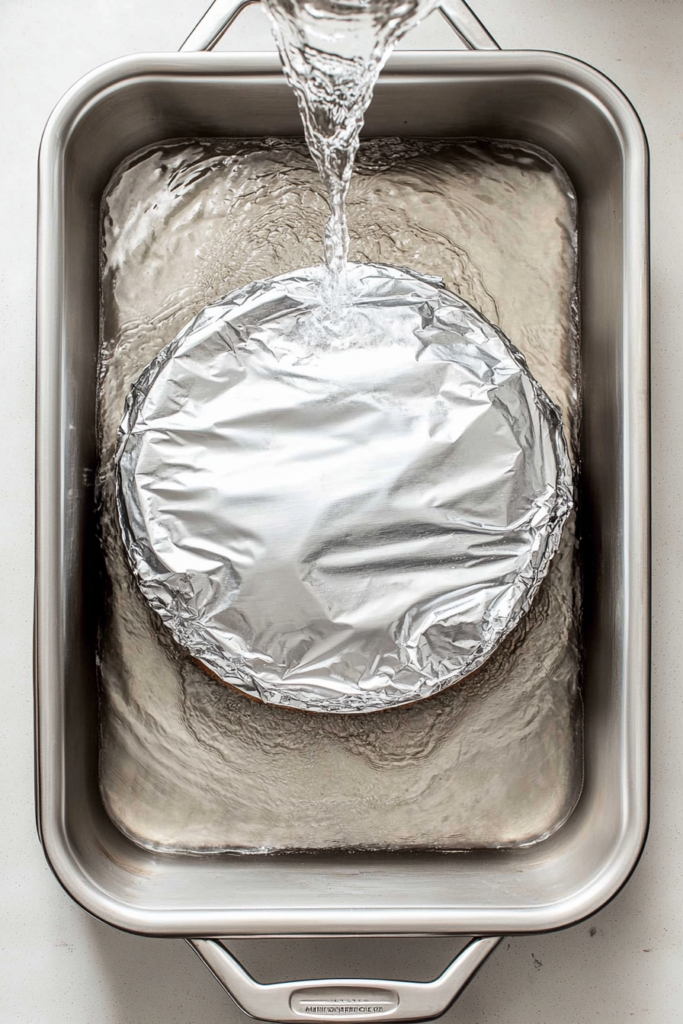
Cover the pan with foil. Set it into a larger dish. Pour boiling water around it until it reaches about an inch up the sides.
This water bath keeps the flan calm. No cracking. No curdling.
After about an hour, check it. The edges should be set. The center should jiggle—like Jell-O. Not liquid. Not firm. Just right.
If the middle still looks loose, give it another 10 minutes.
Cooling and setting
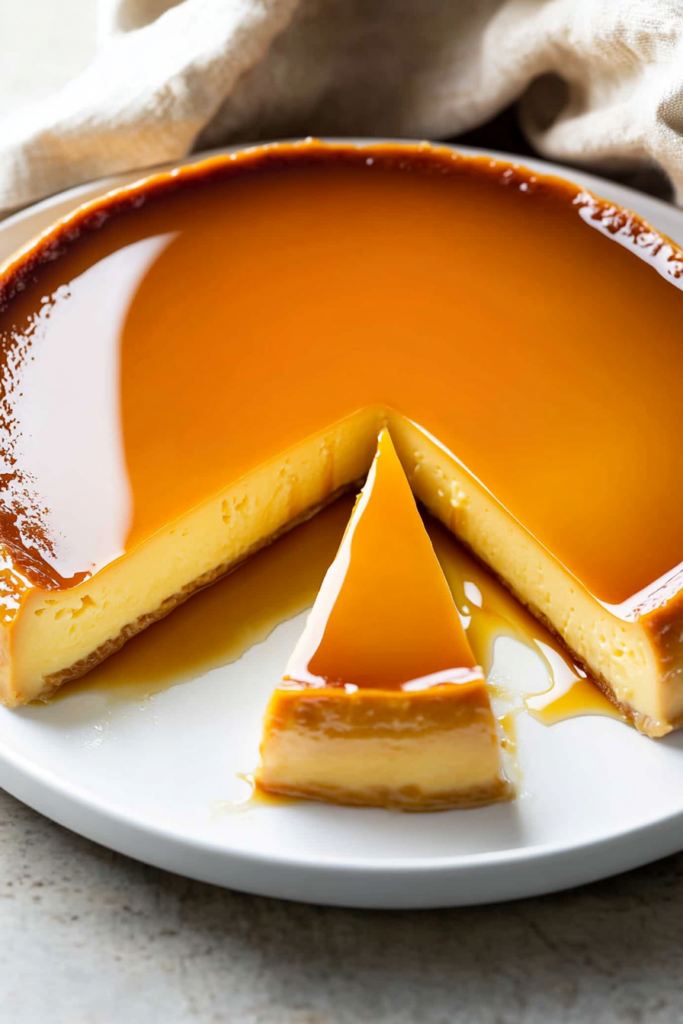
Out of the oven, it rests on the counter for an hour. Then into the fridge for at least four hours—overnight if you can wait.
This is where everything comes together.
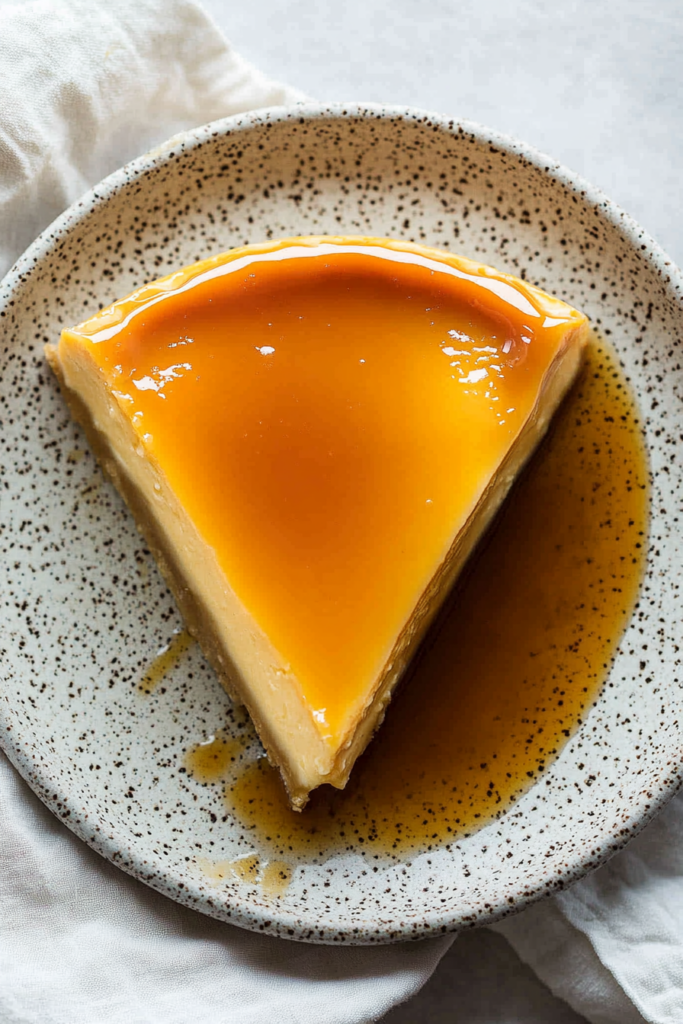
To unmold, run a knife around the edge. Plate on top. Deep breath. Flip.
If it sticks? No panic. A little warm water under the pan melts the caramel and loosens things right up.
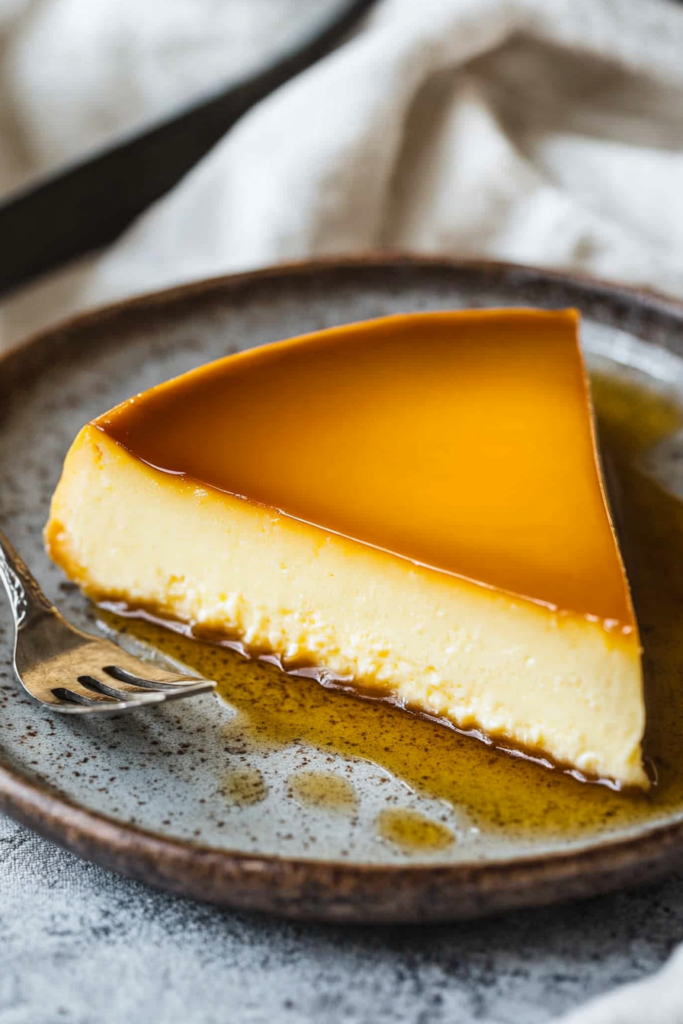
Variations & Customization
This flan is flexible.
Want it a little lighter? Reduce the cream cheese slightly—just know you’ll lose some richness.
Looking for a flavor twist? Espresso, orange zest, or even a splash of coconut milk pairs beautifully with caramel.
Diet-wise, it’s naturally gluten-free. Vegan versions are possible—but they’re a completely different recipe using agar or starches instead of eggs.
For special occasions, I sometimes infuse the caramel with cinnamon or serve the flan with fresh berries. On regular days? Just flan and caramel. Nothing else needed.
Serving & Storage
I serve flan cold. Always. With extra caramel spooned over the top.
A few berries or mint leaves are nice—but optional. Let the flan shine.
It’s perfect with coffee or espresso. And if you’re feeling indulgent, a small scoop of vanilla ice cream never hurts.
Leftovers keep well in the fridge for about four days. No reheating—custard doesn’t like it. This dessert is meant to be enjoyed straight from the fridge.
Freezing isn’t ideal. Texture changes. But making it a day ahead?
Highly recommended.
Honestly, I think this flan tastes even better the next day.