
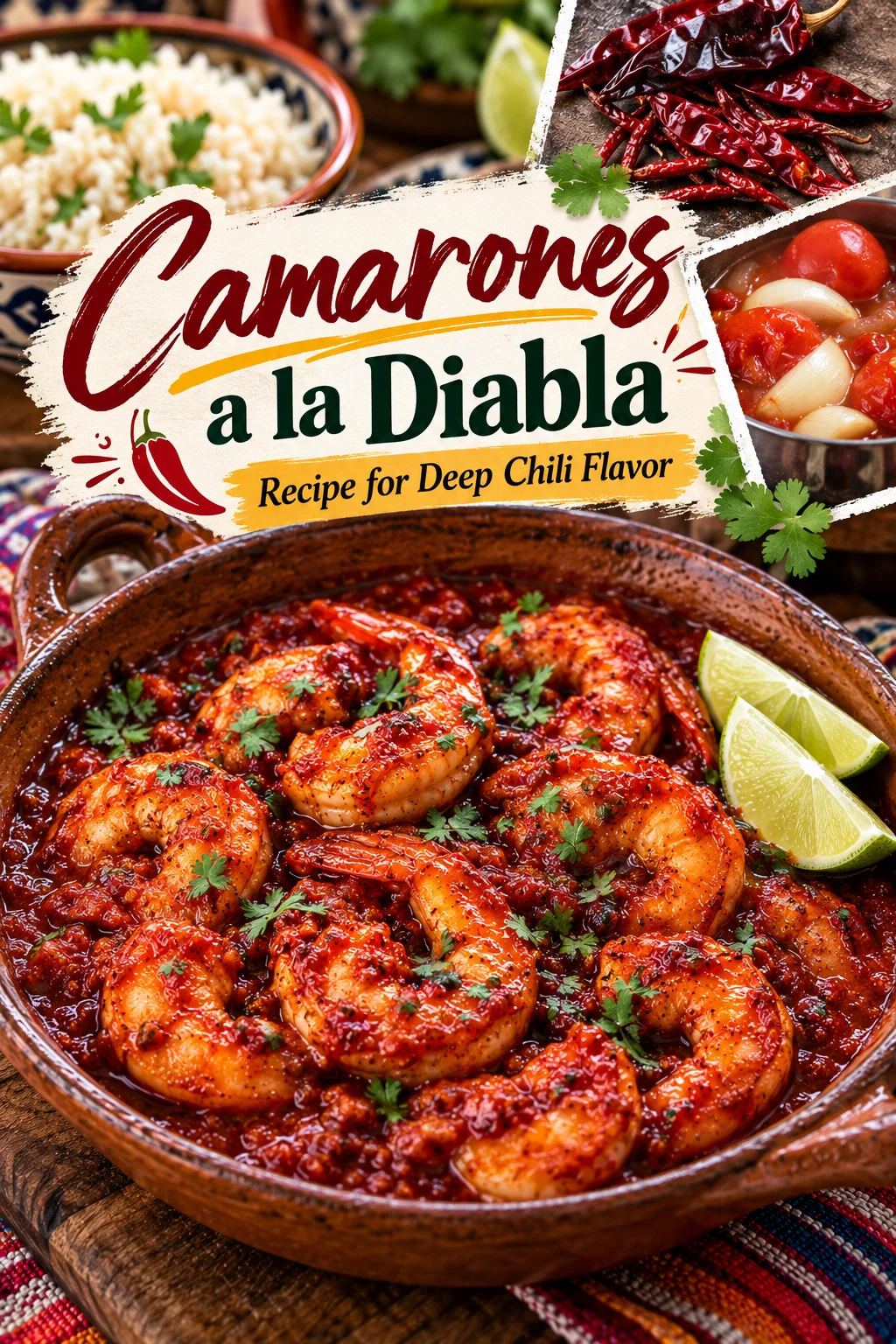
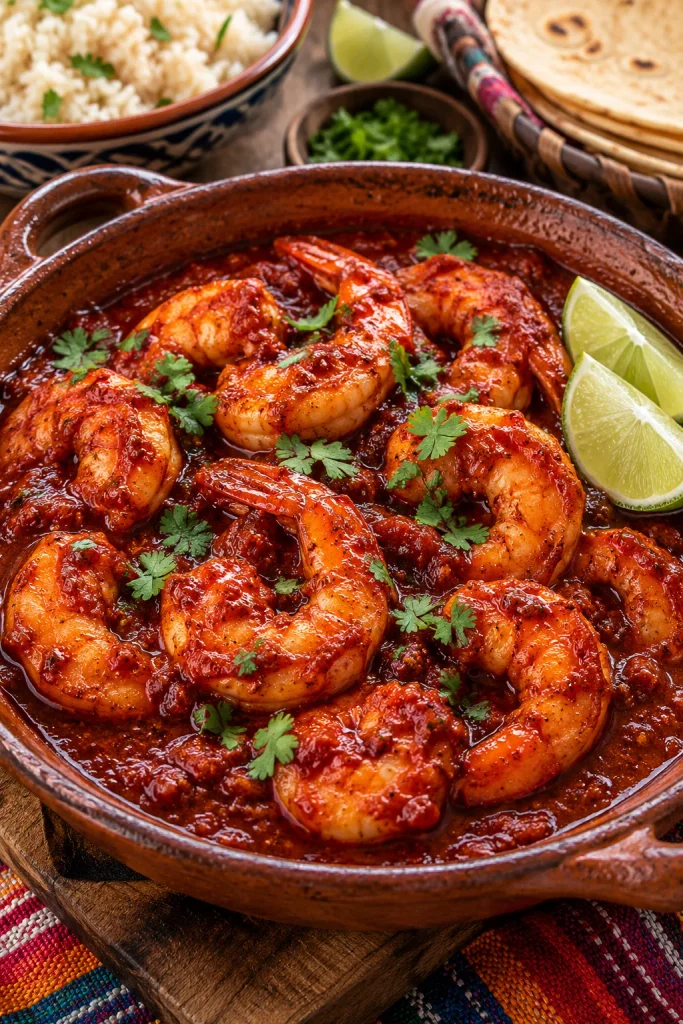
Camarones a la Diabla is a Mexican shrimp dish made by coating quickly cooked shrimp in a smooth red sauce of dried guajillo chiles, chile de árbol, tomatoes, onion, garlic, and acid. The best version takes about 35 minutes, balances smoky heat with acidity, and keeps the shrimp tender by adding them to the finished sauce only briefly.
Key Facts
- This Camarones a la Diabla recipe makes 4 servings from 1 1/2 pounds of large shrimp.
- Guajillo chiles provide color and earthy flavor, while chile de árbol supplies sharper heat.
- The sauce needs 5-8 minutes of simmering after blending to thicken and lose its raw flavor.
- Large shrimp generally finish cooking in 2-4 minutes, depending on size and pan temperature.
- A typical United States grocery cost is $18-$30 for four servings, excluding optional side dishes.
- The finished shrimp should be opaque, firm, and curved into a loose “C,” not a tight ring.
What Is Camarones a la Diabla?
Camarones a la Diabla, translated as “devil’s shrimp,” is a Mexican seafood preparation centered on shrimp and a fiery red chile sauce. The sauce is commonly built from dried Mexican chiles, tomato, garlic, onion, and an acidic finishing ingredient such as lime juice or vinegar.
The name does not identify one single standardized recipe. Coastal cooks may use guajillo, chile de árbol, chipotle, morita, or regional chiles, while restaurant versions sometimes include ketchup, tomato paste, butter, or cream. The defining feature is the combination of shrimp with a red, hot, concentrated sauce.
A properly made sauce tastes smoky, earthy, tangy, and moderately sweet before the heat arrives. Pure heat without acidity or savoriness usually indicates poorly balanced seasoning rather than a more authentic result.
Before You Start
This recipe requires a blender, a large skillet, a saucepan or kettle for hot water, tongs, and a fine-mesh strainer if you want an especially smooth sauce. Wear gloves when handling dried chiles, particularly if you add habanero or extra chile de árbol.
| Requirement | Typical specification | Practical note |
|---|---|---|
| Yield | 4 servings | About 6 ounces of raw shrimp per person |
| Total time | 30-35 minutes | Includes 10 minutes of chili soaking |
| Active cooking | 20-25 minutes | Shrimp cook near the end |
| Difficulty | Moderate | Blending and heat control require attention |
| Main pan | 12-inch skillet | Stainless steel, cast iron, or nonstick |
| Blender | 4-cup capacity | Blend sauce in batches if necessary |
| Typical cost | $18-$30 | United States supermarket estimate |
| Target shrimp temperature | 145°F | Use an instant-read thermometer if available |
The recipe works best with 16/20 or 21/25 shrimp, where the first number indicates the approximate number of shrimp per pound. Smaller 31/40 shrimp can work, but they need less cooking time and are easier to overcook.
Ingredient List
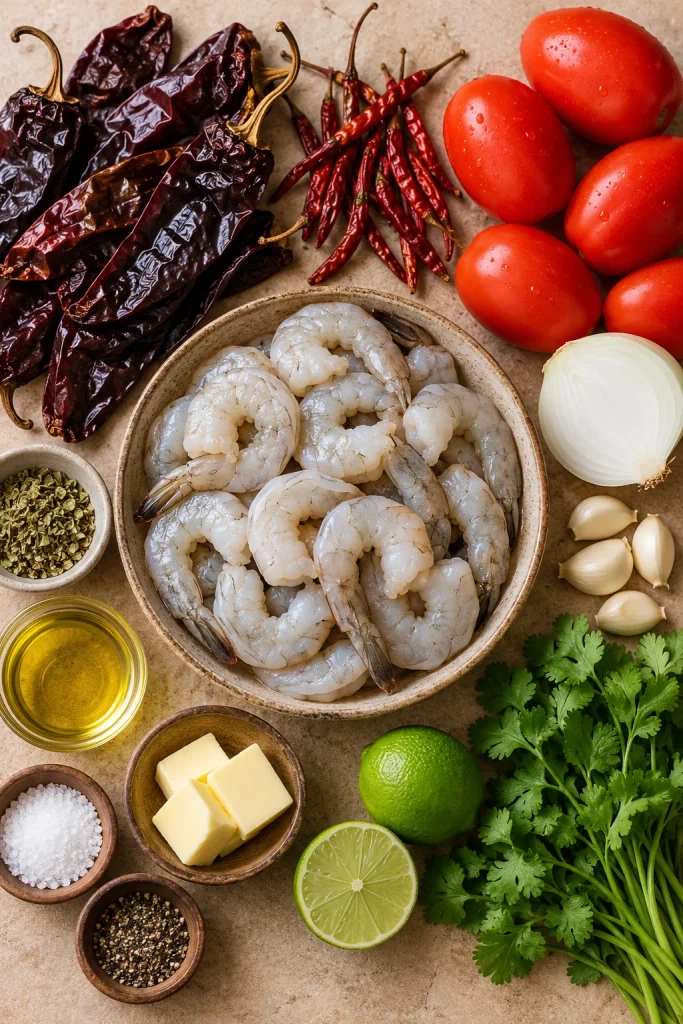
- 1 1/2 pounds large shrimp, peeled and deveined
- 4 dried guajillo chiles
- 3 dried chiles de árbol
- 2 medium Roma tomatoes, about 12 ounces total
- 1/2 medium white onion
- 4 garlic cloves
- 2 tablespoons unsalted butter
- 1 tablespoon neutral oil
- 1 teaspoon dried Mexican oregano
- 1/2 cup chili-soaking water, as needed
- 1 teaspoon kosher salt, plus more to taste
- 1/4 teaspoon black pepper
- 1 tablespoon lime juice or apple cider vinegar
- Fresh cilantro for serving
For a less spicy sauce, use one chile de árbol or replace it with half of a seeded red Fresno chile. For a hotter sauce, use five to eight chiles de árbol, but increase the acid and salt only after tasting.
Which Chiles Make the Best Diabla Sauce?
Guajillo and chile de árbol produce the most useful starting combination for Camarones a la Diabla. Guajillo contributes red color, dried-fruit notes, and mild to medium heat, while chile de árbol supplies a sharper, more direct burn.
| Chili | Typical role | Approximate heat | Flavor contribution |
|---|---|---|---|
| Guajillo | Main sauce base | 2,500-5,000 SHU | Raisin, tea, mild berry |
| Chile de árbol | Heat booster | 15,000-30,000 SHU | Dry, grassy, sharp |
| Chipotle in adobo | Shortcut or smoky variation | 2,500-8,000 SHU | Smoke, tomato, vinegar |
| Ancho | Mild, rich variation | 1,000-1,500 SHU | Plum, cocoa, raisin |
| Habanero | Extreme modern variation | 100,000-350,000 SHU | Tropical fruit, intense heat |
Scoville values vary by growing conditions, age, and testing method, so the figures are practical ranges rather than a prediction of the final sauce. Seeds do not contain all the heat, but removing membranes and some seeds can reduce the sharpness.
Toast the chiles briefly. A darkened, blistered chile is usually bitter, and blending it into a larger batch rarely fixes the problem.
How Do You Prepare the Shrimp?
Prepare shrimp by thawing them completely, removing the shells and vein, and drying their surfaces with paper towels. Dry shrimp sear more effectively because excess water otherwise lowers the pan temperature and dilutes the seasoning.
Frozen shrimp are acceptable and often practical. Thaw them overnight in the refrigerator, or place the sealed shrimp in cold water for 20-30 minutes; do not thaw seafood on the counter. After thawing, drain and pat the shrimp dry.
Season the shrimp with 1/2 teaspoon salt and the black pepper immediately before cooking. Do not marinate them in lime juice for a long period because the acid changes the surface texture and can make the shrimp chalky.
How to Make Camarones a la Diabla
Step 1: Toast and Soften the Chiles
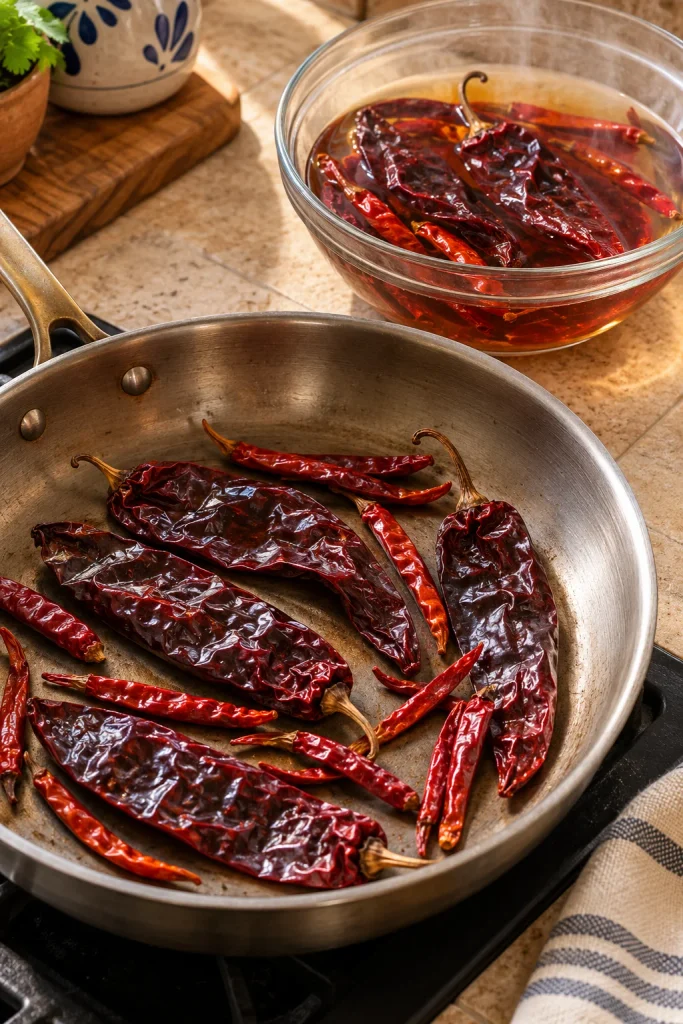
Remove the stems from the guajillo chiles and shake out most of their seeds. Leave the chile de árbol whole for a hotter sauce, or remove its seeds for a milder result.
Heat a dry skillet over medium heat. Toast the chiles for 20-30 seconds per side, pressing them flat with tongs, until they smell fragrant. Place them in a heatproof bowl and cover with boiling water for 10 minutes.
You’ll know it worked when: the chiles bend easily and their skins feel soft.
Common mistake: Toasting until the skins turn black. Discard burned chiles rather than adding them to the sauce.
Step 2: Cook the Tomato Base
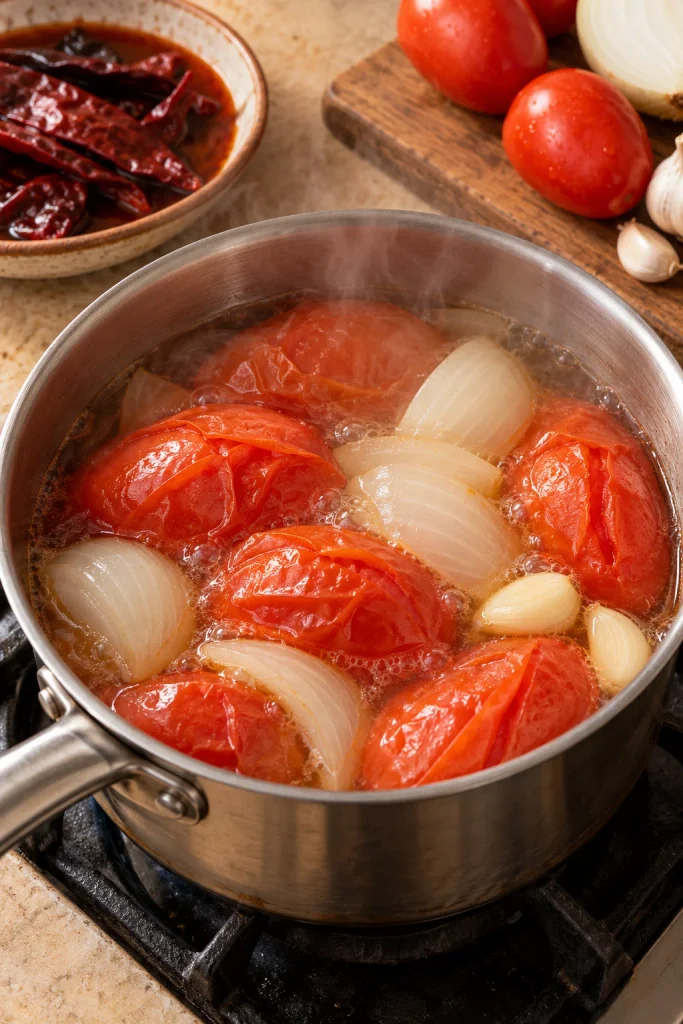
While the chiles soak, place the tomatoes, onion, and garlic in a saucepan with enough water to cover the tomatoes. Simmer for 8-10 minutes, until the tomato skins split and the onion softens.
Roasting the tomatoes instead creates a sweeter, deeper sauce. Roast them in a dry skillet or under a broiler until browned in spots, then soften the onion and garlic separately.
You’ll know it worked when: a knife passes through the tomato without resistance.
Common mistake: Boiling the garlic for too long. Overcooked garlic can become harsh and watery.
Step 3: Blend and Strain the Diabla Sauce
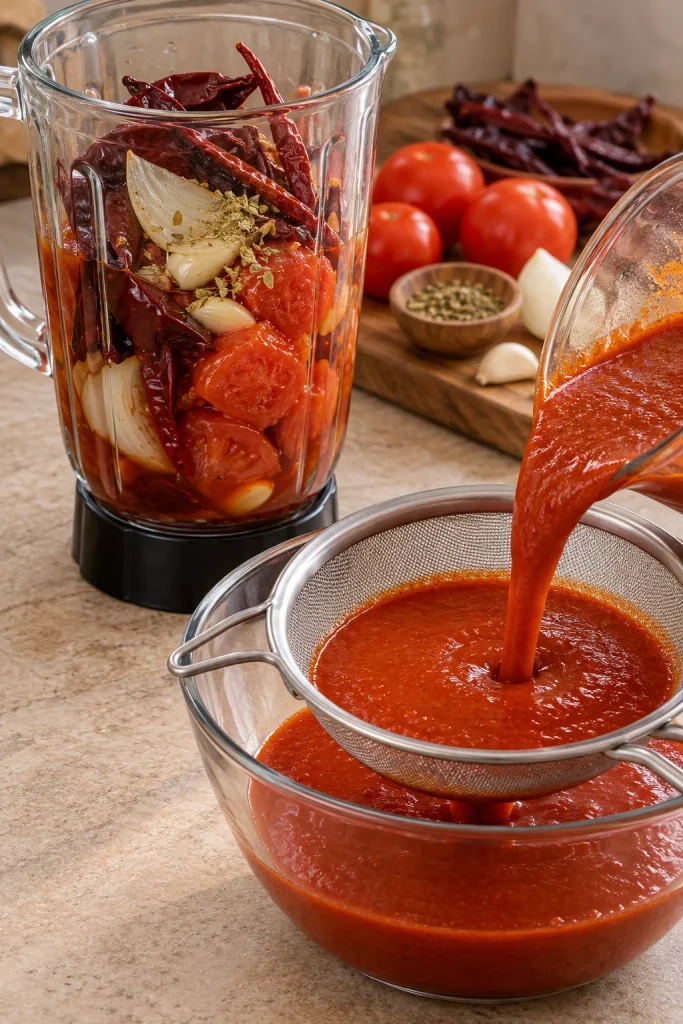
Drain the softened chiles, reserving 1/2 cup of their soaking water. Blend the chiles, cooked tomatoes, onion, garlic, oregano, and 1/2 teaspoon salt with 1/4 cup of soaking water.
Blend for 60-90 seconds, then add more liquid one tablespoon at a time until the mixture moves smoothly. Strain the sauce through a fine-mesh sieve if you want a restaurant-style texture.
You’ll know it worked when: the puree is uniform, glossy, and free of large skin fragments.
Common mistake: Adding all the soaking water at once. A watery sauce requires longer reduction and can lose its fresh chili flavor.
Step 4: Sear the Shrimp Briefly
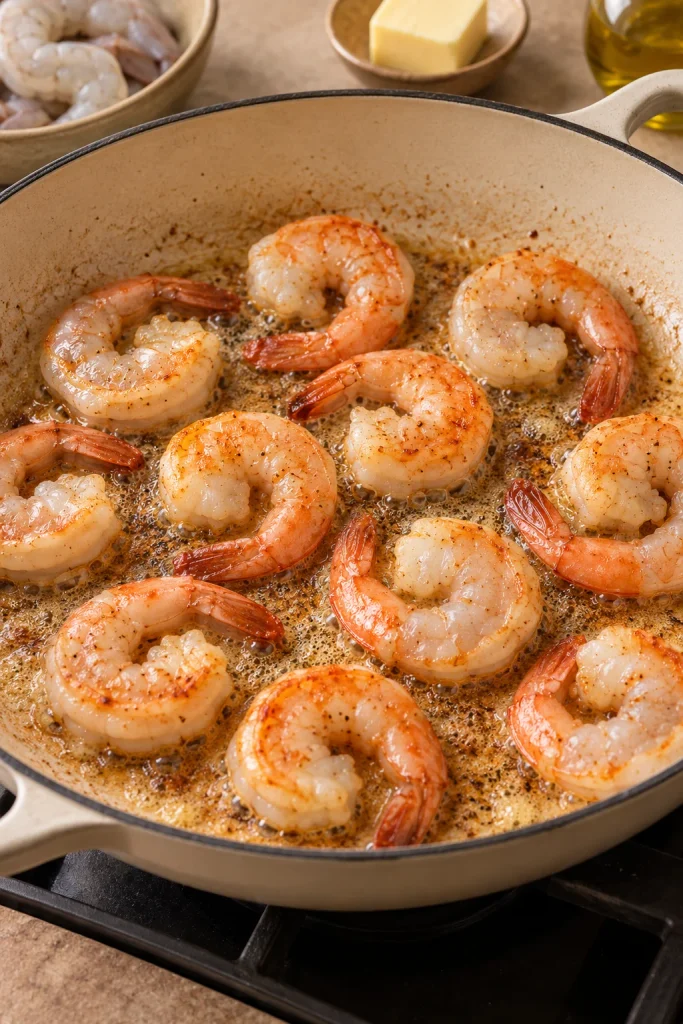
Heat the oil and 1 tablespoon of butter in a 12-inch skillet over medium-high heat. Add the shrimp in a single layer and cook for about 60-90 seconds on the first side, then 30-60 seconds on the second side.
Remove the shrimp to a plate while the centers remain slightly translucent. The residual heat will continue cooking them, and the shrimp will finish later in the sauce.
You’ll know it worked when: the outside is pink and the center is still slightly gray or translucent.
Common mistake: Crowding the skillet. Cook in two batches if the shrimp touch each other, because steaming prevents browning.
Step 5: Fry and Reduce the Sauce
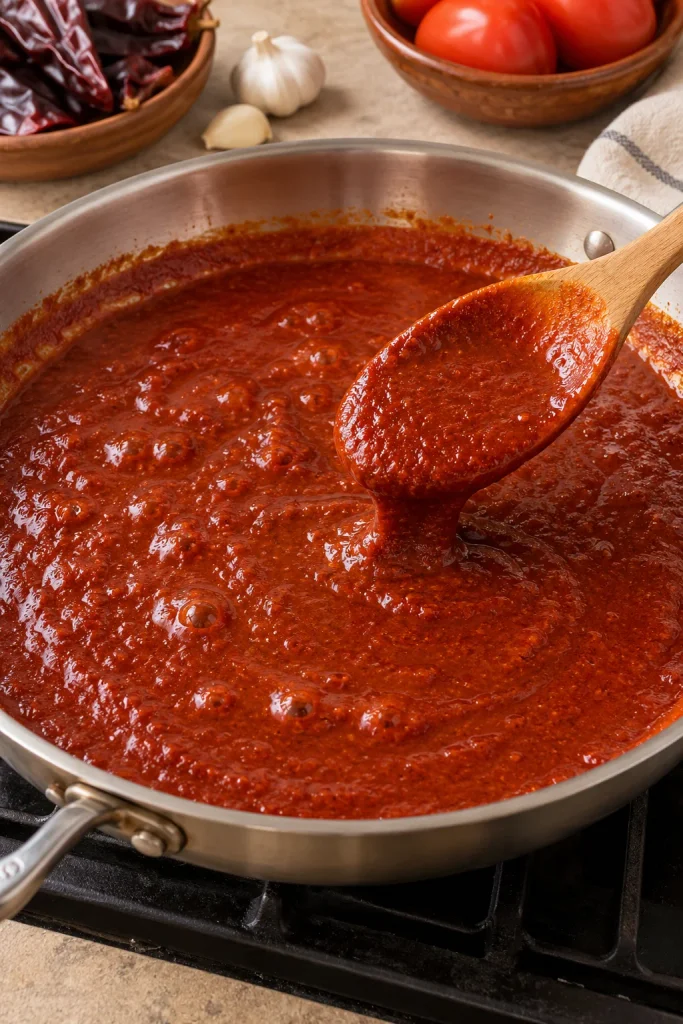
Lower the heat to medium and add the remaining tablespoon of butter. Pour the blended sauce into the skillet carefully because hot fat can splatter.
Simmer the sauce uncovered for 5-8 minutes, stirring occasionally. The reduction cooks off raw tomato flavor, concentrates the chiles, and allows the fat to disperse through the puree.
You’ll know it worked when: the sauce darkens slightly and coats the back of a spoon in a continuous layer.
Common mistake: Keeping the heat high. Rapid boiling can splatter the sauce and produce a scorched bottom before the mixture thickens.
Step 6: Finish the Shrimp and Season
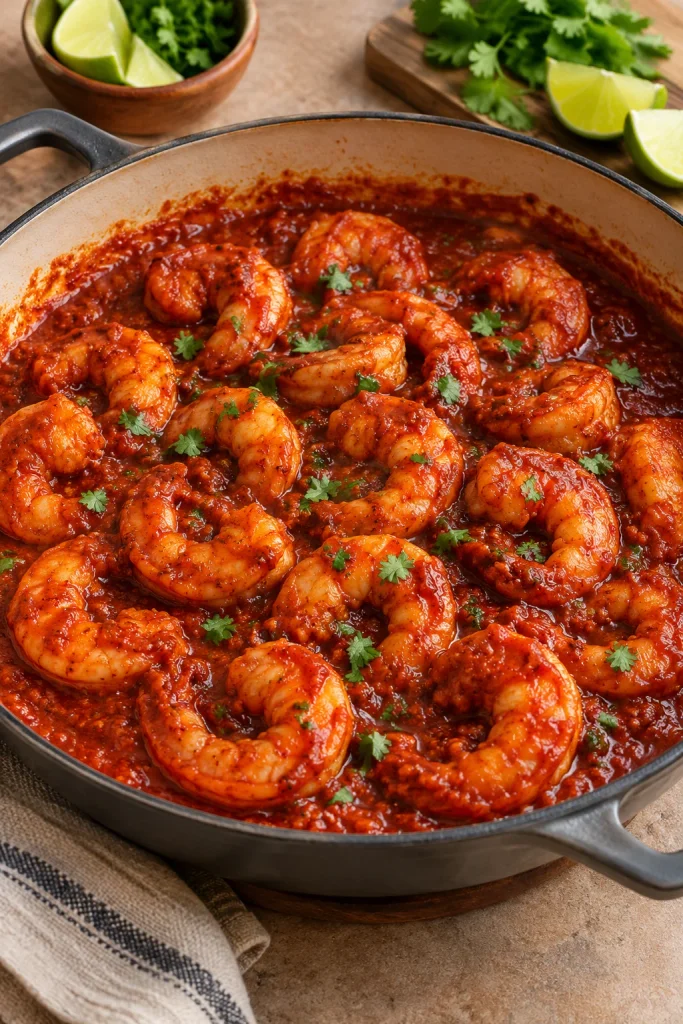
Return the shrimp and any collected juices to the skillet. Simmer for 60-120 seconds, turning the shrimp once, until the thickest pieces are opaque and firm.
Stir in the lime juice or vinegar. Taste and adjust salt first, then acid, then heat. If the sauce is too hot, add a small amount of butter or cream rather than a large quantity of sugar.
You’ll know it worked when: the shrimp are fully opaque, loosely curved, and coated without being buried in a watery sauce.
Common mistake: Leaving the shrimp in the skillet while the sauce reduces. That often adds several unnecessary minutes to the cooking time.
How Spicy Should the Sauce Be?
The standard recipe is medium-hot, but the final heat depends mainly on the number and type of chiles de árbol. A useful starting ratio is four guajillos to three chiles de árbol, then adjusting the finished sauce with additional chile paste or a mild tomato puree.
| Heat target | Guajillo | Chile de árbol | Optional addition |
|---|---|---|---|
| Mild | 4 | 0-1, seeded | 1 extra Roma tomato |
| Medium | 4 | 2-3 | No extra chili |
| Hot | 4 | 4-6 | Keep some seeds |
| Very hot | 4 | 7-8 | 1/2 habanero |
| Smoky medium | 3 | 1 | 1 chipotle in adobo |
Capsaicin dissolves in fat more readily than water, so butter or oil can spread heat across the sauce without removing it. Dairy reduces perceived heat more effectively than water, although adding cream changes the dish into a creamy variation.
How to Balance a Sauce That Is Too Hot
Add unsalted tomato puree one tablespoon at a time when the sauce is aggressively hot but otherwise flavorful. Add butter, Mexican crema, or heavy cream when you want a richer, softer finish.
Acid does not remove capsaicin, but lime juice or vinegar makes the sauce taste more balanced. Salt also changes how strongly diners perceive bitterness and heat. Add these adjustments gradually because over-acidifying the sauce makes the chili taste thin.
Traditional Sauce or Shortcut Version?
The dried-chili method is the better choice when you want earthy flavor, natural red color, and control over the heat. Chipotle in adobo is faster and more accessible, but its smoke and vinegar move the flavor away from the guajillo-based coastal style.
| Method | Time | Typical cost | Heat control | Flavor profile |
|---|---|---|---|---|
| Dried guajillo and árbol | 30-35 minutes | $18-$30 | High | Earthy, red-fruit, sharp |
| Chipotle in adobo | 20-25 minutes | $16-$25 | Medium | Smoky, tangy, tomato-rich |
| Tomato paste shortcut | 20 minutes | $14-$22 | High | Sweet, concentrated, less complex |
| Creamy diabla | 30-35 minutes | $20-$32 | Medium | Rich, mellow, rounded |
| Mixed seafood | 40-50 minutes | $28-$45 | Medium | Briny, varied, festive |
For a shortcut, blend two chipotles in adobo with 8 ounces of tomato sauce, two garlic cloves, 1/4 onion, oregano, and lime juice. Simmer the mixture for 5-7 minutes before adding the shrimp.
The shortcut is useful for a weeknight meal, but it is not a one-to-one substitute for dried guajillo. Chipotle contributes smoke and vinegar, whereas guajillo supplies a cleaner dried-fruit flavor.
What Variations Work Best?
Camarones a la Diabla can be adapted without losing its identity if the red chile sauce remains the dominant flavor. Cream, extra smoke, and other seafood should modify the base rather than completely replace it.
- Creamy diabla: Stir in 1/4 cup Mexican crema after removing the pan from the heat. Do not boil the cream.
- Dairy-free: Use olive oil or additional neutral oil instead of butter.
- Lower-heat: Replace half the chile de árbol with an ancho or additional guajillo.
- Seafood mix: Add cooked octopus, scallops, or mussels separately so delicate shrimp do not overcook.
- Vegetable version: Use roasted cauliflower or mushrooms, although the result is no longer a seafood dish.
- Extra smoky: Add one chipotle in adobo to the dried-chili sauce.
Coconut milk is possible but changes the flavor substantially. It works best when the dish is intentionally moving toward a Mexican-inspired coconut seafood stew rather than a traditional diabla profile.
Pin This For Later
How Should You Serve the Shrimp?
Serve Camarones a la Diabla immediately with a starch that can absorb the sauce. Mexican white rice is the most practical pairing, while warm corn tortillas allow diners to make small tacos from the shrimp and sauce.
| Side dish | Amount for 4 servings | Preparation time | Why it works |
|---|---|---|---|
| Mexican white rice | 2 cups cooked | 25 minutes | Absorbs sauce and softens heat |
| Corn tortillas | 8-12 tortillas | 5 minutes | Converts shrimp into small tacos |
| Avocado | 1 large | 5 minutes | Adds cool fat |
| Refried beans | 2 cups | 10 minutes | Adds savory bulk |
| Cabbage slaw | 3 cups | 10 minutes | Adds crunch and acidity |
| Cucumber and lime | 2 cucumbers | 5 minutes | Provides a cold, fresh contrast |
Garnish with cilantro and serve lime wedges separately. Avoid drowning the plate in extra lime because the sauce already contains acid, and excessive citrus can obscure the dried-chili flavor.
How Do You Scale the Recipe?
Scale the shrimp and sauce together so the chili concentration remains consistent. A four-serving batch uses approximately 6 ounces of raw shrimp per person, although larger portions may require 8 ounces per person.
| Servings | Shrimp | Guajillo | Chile de árbol | Tomatoes |
|---|---|---|---|---|
| 2 | 12 ounces | 2 | 1-2 | 1 |
| 4 | 1 1/2 pounds | 4 | 3 | 2 |
| 6 | 2 1/4 pounds | 6 | 4-5 | 3 |
| 8 | 3 pounds | 8 | 6 | 4 |
Use a wider skillet for six or eight servings, or cook the shrimp in batches. A crowded pan lowers the cooking temperature and creates uneven sauce reduction.
For a dinner party, prepare the sauce one or two days ahead, then refrigerate it in a sealed container. Cook fresh shrimp shortly before serving because reheated shrimp become firm and dry quickly.
Why Is My Diabla Sauce Bitter, Thin, or Dull?
A bitter diabla sauce usually results from burned dried chiles, excessive oregano, or garlic that has scorched in the pan. A thin sauce usually contains too much soaking water or has not simmered long enough. A dull sauce often needs salt and acid rather than more chiles.
| Problem | Likely cause | Best correction |
|---|---|---|
| Bitter sauce | Burned chiles | Replace the chili puree |
| Watery sauce | Excess liquid | Simmer uncovered 5-10 minutes |
| Too acidic | Excess lime or vinegar | Add butter and tomato puree |
| Too sweet | Ketchup or excess tomato paste | Add lime, salt, and chile |
| Weak flavor | Insufficient salt or reduction | Add salt, then simmer |
| Rubbery shrimp | Overcooking | Prevent on next batch; do not reheat repeatedly |
| Pale sauce | Low chili concentration | Add strained chili puree |
| Grainy texture | Unstrained skins and seeds | Blend longer and strain |
Do not try to rescue severely burned chili sauce with sugar. Sweetener can mask bitterness briefly, but the scorched flavor remains. Starting over is the better choice when the puree smells acrid.
How Do You Store and Reheat It?
Store cooked Camarones a la Diabla in a sealed container in the refrigerator for up to three days. Refrigerate leftovers within two hours, or within one hour if the room temperature is above 90°F.
Store the sauce separately from raw or cooked shrimp whenever possible. The sauce freezes well for about two months, but cooked shrimp lose texture after freezing and thawing.
Reheat the sauce in a skillet over medium-low heat, then add freshly cooked shrimp for the final minute. If reheating a complete leftover portion, use short 20-30 second bursts and stop as soon as the shrimp are hot.
Expert Rules for Better Results
- Cook the sauce before judging its heat. Raw blended chiles can taste harsh and disconnected; five to eight minutes of simmering changes both aroma and texture.
- Use the shrimp’s shape as a warning signal. A loose “C” usually indicates tender shrimp, while a tight “O” often signals overcooking.
- Strain for texture, not authenticity. Straining produces a smoother sauce, but many home-style Mexican preparations retain some chili skin and seed texture.
- Season in layers. Salt the shrimp, season the sauce, then correct acid at the end. Adding all salt at the beginning makes reduction unpredictable.
- Do not confuse darker color with better flavor. A deep red sauce comes from chili concentration and reduction, while black flecks usually indicate scorching.
Frequently Asked Questions
Can I make Camarones a la Diabla without a blender?
Yes. Finely chop softened chiles, tomatoes, onion, and garlic, then cook them until tender before pressing the mixture through a food mill or coarse sieve. The sauce will be less smooth, but the flavor will remain recognizable. A stick blender also works in a tall container.
Should I remove all the seeds from the chiles?
Remove the guajillo seeds for a smoother, milder sauce, but seed removal is optional for chile de árbol. Most heat comes from the membranes and chili flesh, so removing seeds alone does not make the sauce mild. Adjust the total number of hot chiles instead.
Can I use pre-cooked shrimp?
Pre-cooked shrimp are not ideal because they become tough quickly. If they are the only option, warm them in the finished sauce for 30-60 seconds, just until heated through. Do not sear them for a full minute per side.
What can replace Mexican oregano?
Use 1/2 teaspoon dried marjoram or Italian oregano if Mexican oregano is unavailable. Mexican oregano has a more citrusy, floral character, so finish with lime when using a substitute. Avoid adding a full teaspoon of strong Italian oregano because it can dominate the chiles.
Is Camarones a la Diabla gluten-free?
The basic recipe is naturally gluten-free because it uses shrimp, chiles, vegetables, butter, oil, and citrus. Check canned chipotle, bouillon, and prepared tomato products for labeling if cross-contact or strict gluten avoidance matters.
How can I make the dish less spicy after cooking?
Add unsalted tomato puree, a small amount of cream, or additional cooked onion to dilute the sauce. Serve the shrimp with rice, avocado, beans, or tortillas to reduce the heat per bite. Adding water alone weakens flavor without effectively balancing the dish.
The Bottom Line
A reliable Camarones a la Diabla recipe depends on three controls: toast dried chiles without burning them, reduce the blended sauce until it coats a spoon, and cook the shrimp only until opaque. Use four guajillos and three chiles de árbol for a balanced medium-hot batch, then adjust heat with additional chiles, acid, or cream. Serve the finished dish immediately with rice, tortillas, avocado, or beans.