

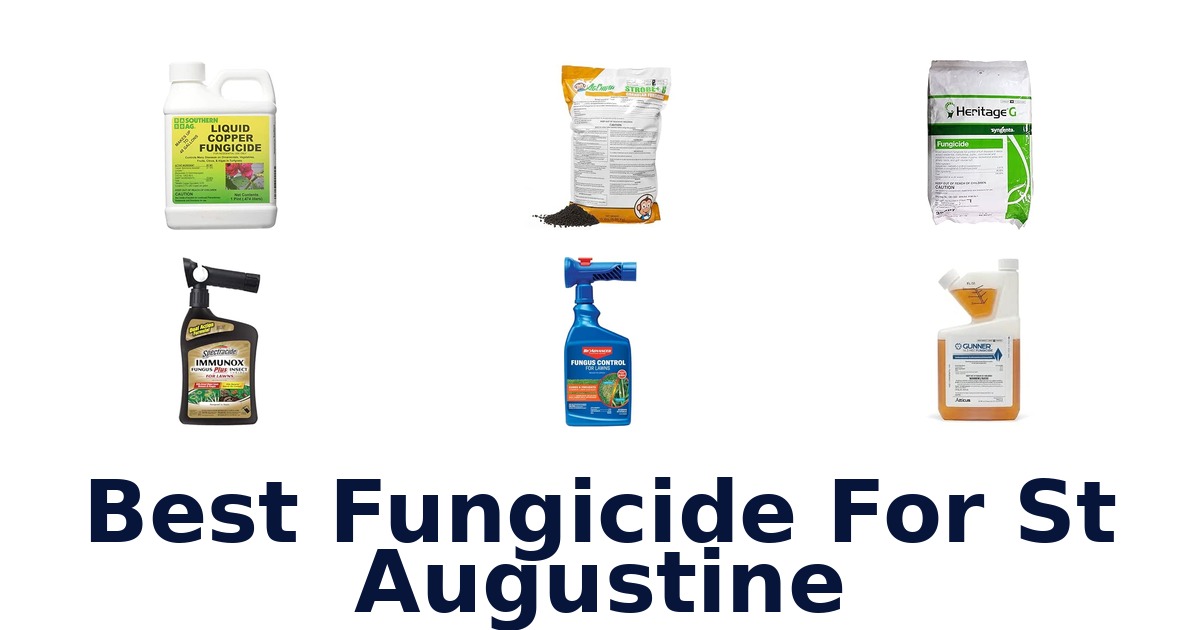
A strong choice for St Augustine should list the lawn diseases it controls and match the grass type and application directions on its label. Scotts DiseaseEx Lawn Fungicide leads this roundup because it is specifically presented as a lawn fungicide and lists control of 26 diseases, including brown patch. The other options include liquid concentrates, hose-end spray, and granules, with some offering named active ingredients such as azoxystrobin or propiconazole.
Product data here does not confirm that every formula is labeled for St Augustine, so check the product label before applying it. Compare the target disease, format, and directions rather than assuming that broad-spectrum wording alone guarantees a fit for your lawn.
Scotts DiseaseEx Lawn Fungicide is the leading pick because it is explicitly a lawn fungicide and lists control of 26 lawn diseases, including brown patch, red thread, and powdery mildew. That breadth makes it a practical starting point when the exact lawn disease is uncertain, provided its label permits use on St Augustine. For a liquid concentrate with a named active ingredient, consider Atticus Gunner 14.3 MEC; it contains 14.3% propiconazole and lists brown patch among its targets.
Always follow the product label for grass compatibility and application.
Our Top Picks

Scotts DiseaseEx Lawn Fungicide
This lawn fungicide lists control of 26 diseases, including brown patch, red thread, and powdery mildew, giving it the broadest stated lawn coverage.
View on Amazon Brown Patch Pick
Its 14.3% propiconazole formula lists protection against more than 20 plant fungi, including brown patch, a named lawn disease.
View on Amazon Azoxystrobin Concentrate
This liquid concentrate contains 22.9% azoxystrobin and lists control of more than 20 turf fungi, including anthracnose and leaf spot.
View on Amazon- Fungus and Insect Spectracide Immunox Fungus Plus Insect Control
- Broad Disease List Bonide Infuse Lawn Granules
Compare fungicides by disease coverage and application type
| # | Product | Weight | Form | Buy |
|---|---|---|---|---|
| 1 | 1. Scotts DiseaseEx Lawn FungicideBest Overall | 10 lb | Patch | View on Amazon |
| 2 | 2. Atticus Gunner 14.3 MECBrown Patch Pick | 4 oz | Liquid | View on Amazon |
| 3 | 3. Atticus Artavia 2 SCAzoxystrobin Concentrate | 1.3 lb | Liquid | View on Amazon |
| 4 |  4. Spectracide Immunox Fungus Plus Insect ControlFungus and Insect | 2.4 lb | Spray | View on Amazon |
| 5 |  5. BioAdvanced Fungus ControlRain-resistant liquid lawn control | 2.4 lb | Liquid | View on Amazon |
| 6 |  6. Bonide Infuse Lawn GranulesBroad Disease List | 7.5 lb | Granules | View on Amazon |
| 7 |  7. Syngenta Heritage G FungicideGranular lawn and landscape use | — | Liquid,Granular,Granule | View on Amazon |
| 8 |  8. AgChimp Strobe+ G FungicideBroadcast-spreader granular treatment | 15 lb | Granules | View on Amazon |
| 9 |  9. ferti-lome Liquid Systemic Fungicide IILiquid concentrate for lawn and ornamentals | 2 lb | Liquid | View on Amazon |
| 10 |  10. Southern Ag Liquid Copper FungicideCopper treatment for mixed plants | 1.3 lb | Liquid | View on Amazon |
Detailed Reviews: Best Fungicide For St Augustine
#1 · Best Overall
1. Scotts DiseaseEx Lawn Fungicide
- Weight: 10 lb
- Form: Patch
Best for: Broad lawn disease coverage.
Why it ranks #1: This lawn fungicide lists control of 26 diseases, including brown patch, red thread, and powdery mildew, giving it the broadest stated lawn coverage.
Control and prevention for 26 listed lawn diseases give Scotts DiseaseEx a wide-ranging role in a lawn-care plan. It can be used before disease appears or at the first sign of symptoms, making it relevant to both preventive treatment and early response on lawns where several fungal problems are concerns.
The 26-disease list includes brown patch, pythium blight, red thread, powdery mildew, and anthracnose, so the product covers multiple named lawn problems rather than a single disease. Its stated use for prevention before symptoms and control at their first sign supports two different treatment timings. The 10-pound product is a solid-form lawn fungicide; follow its label limits, including the annual maximum of 37 pounds per 1,000 square feet and the treated-area re-entry restriction.
- Controls 26 listed lawn diseases
- Can be used preventively before disease appears
- Targets disease at the first sign of symptoms
- Names brown patch, red thread, and anthracnose among covered diseases
- People and pets must stay out of treated areas until re-entry is allowed.
Skip it if you need a hose-end spray application; Spectracide Immunox comes with a QuickFlip hose-end sprayer.
Choose Scotts if you want one lawn product with a long named disease list and both preventive and early-symptom use. It suits disease-conscious lawn care, provided you can observe its application limits and treated-area re-entry restriction.
Full product details
| Brand | Scotts |
|---|---|
| Included Components | Fert |
| Item Form | Patch |
| Item Weight | 10 pounds |
| Manufacturer | The Scotts Company LLC |
| Model Number | 032247376105 |
| Warranty Description | Warranty |
Listed on Amazon as: Scotts DiseaseEx Lawn Fungicide, 10 lbs.
View on Amazon#2 · Brown Patch Pick
2. Atticus Gunner 14.3 MEC
- Weight: 4 oz
- Form: Liquid
Best for: Easy-mixing propiconazole concentrate.
Why it ranks #2: Its 14.3% propiconazole formula lists protection against more than 20 plant fungi, including brown patch, a named lawn disease.
A microemulsion concentrate is the defining feature of Atticus Gunner 14.3 MEC, with the supplied description linking its extremely small particles to easier mixing and greater product stability. Its 14.3% propiconazole formula is presented for broad-spectrum prevention against more than 20 plant fungi, including brown patch and leaf spot.
The MEC formulation is described as easy-mixing and more stable, which can simplify preparing a concentrate for application while supporting product handling. Gunner's stated protection covers more than 20 plant fungi; the specific examples of brown patch and leaf spot make its lawn relevance clear. It is a liquid concentrate supplied in a pint, and its low-odor formulation may matter during handling. Use the product label for application rates and directions not provided here.
- Contains 14.3% propiconazole
- MEC formulation is described as easy to mix
- Formulation is stated to have greater product stability
- Names brown patch and leaf spot among 20-plus diseases
- This is a concentrate, and the supplied information does not state mixing rates.
Skip it if you prefer a granular application rather than liquid concentrate; Bonide Infuse is supplied as granules.
Gunner fits buyers who want a liquid propiconazole concentrate and value the stated easy-mixing MEC formulation. Its named brown patch coverage is relevant to lawn care, while concentrate users should rely on the label for mixing and application details.
Full product details
| Brand | Atticus |
|---|---|
| Included Components | 1 Pint of Gunner 14.3 MEC Fungicide Concentrate |
| Item Form | Liquid |
| Item Weight | 4 ounces |
| Manufacturer | Atticus |
Listed on Amazon as: Atticus Gunner 14.3 MEC Propiconazole Fungicide (16oz) – Protect Your Lawn
View on Amazon#3 · Azoxystrobin Concentrate
3. Atticus Artavia 2 SC
- Weight: 1.3 lb
- Form: Liquid
Best for: Liquid broad-spectrum concentrate.
Why it ranks #3: This liquid concentrate contains 22.9% azoxystrobin and lists control of more than 20 turf fungi, including anthracnose and leaf spot.
Azoxystrobin at 22.9% gives Atticus Artavia 2 SC its central distinction: the active ingredient moves within the plant for stated root-to-leaf protection. The liquid concentrate is aimed at buyers managing disease across turf and ornamental plants, with more than 20 turf and 30 ornamental fungi listed as its coverage scope.
Artavia's stated movement within the plant connects leaf-to-root protection with a broad disease-control role, including foliar and soil-borne fungi. Its coverage claims span more than 20 turf and 30 ornamental plant fungi, with anthracnose and leaf spot named among the targets. The 16-ounce bottle is a liquid concentrate, so it is a fit for buyers who want one product category spanning lawn and landscape needs; the supplied information does not specify application equipment or mixing rates.
- Contains 22.9% azoxystrobin
- States root-to-leaf protection through movement within the plant
- Covers more than 20 turf fungi
- Also covers more than 30 ornamental plant fungi
- The supplied information gives no application rate or application-equipment details.
Skip it if you want a ready-to-use hose-end lawn spray; Spectracide Immunox specifies its QuickFlip hose-end sprayer.
Artavia suits lawn and landscape owners seeking liquid azoxystrobin coverage across turf and ornamentals. Its breadth is useful when both plant groups matter, but buyers who need explicit mixing rates or application directions should consult the product label before choosing.
Full product details
| Brand | Atticus |
|---|---|
| Included Components | One 16 oz bottle of Artavia 2 SC |
| Item Form | Liquid |
| Item Weight | 1.3 pounds |
| Manufacturer | Atticus |
| Special Features | organic |
| Additional Information | Important information Ingredients Azoxystrobin |
Listed on Amazon as: Atticus Artavia 2 SC Azoxystrobin Fungicide (16oz) – Broad Spectrum Control
View on Amazon#4 · Fungus and Insect
4. Spectracide Immunox Fungus Plus Insect Control
- Weight: 2.4 lb
- Form: Spray
Best for: Hose-end fungus and insect control.
Why it ranks #4: The ready-to-spray lawn formula controls listed diseases and kills listed lawn-damaging insects on contact, combining two stated functions.
A QuickFlip hose-end sprayer pairs with a dual-action formula in Spectracide Immunox, letting buyers apply a product that controls listed lawn diseases and kills listed lawn-damaging insects on contact. Rainproof performance in hours adds another practical feature for lawns exposed to weather after treatment.
The sprayer attaches to a garden hose and activates with a switch flip, avoiding a separate application-equipment step specified in the product description. Its dual-action formula addresses both listed lawn diseases and lawn-damaging insects on contact, while the product is stated to become rainproof in hours. The directions also recommend starting when grass begins to green in spring and treating every two weeks for best results, a recurring schedule buyers should account for.
- QuickFlip sprayer attaches to a garden hose
- Controls listed lawn diseases
- Kills listed lawn-damaging insects on contact
- Becomes rainproof in hours
- The stated best-results schedule calls for treatment every two weeks.
Skip it if you want a disease-only product with no insect-control feature; Atticus Gunner 14.3 MEC is presented as a fungicide.
Choose Spectracide if hose-end application and combined fungus and insect control suit your lawn-care workflow. Its stated spring start and two-week treatment interval are important boundaries for buyers who prefer less frequent scheduled applications.
Full product details
| Brand | Spectracide |
|---|---|
| Included Components | only product |
| Item Form | Spray |
| Item Weight | 2.4 pounds |
| Manufacturer | United Industries |
| Model Number | 96187 |
Listed on Amazon as: Spectracide Immunox Fungus Plus Insect Control for Lawns, 32 oz
View on Amazon#5
5. BioAdvanced Fungus Control
- Weight: 2.4 lb
- Form: Liquid
Best for: Rain-resistant liquid lawn control.
Why it ranks #5: This 32-fluid-ounce liquid is specifically described as lawn fungus control, and its product information says it resists washing away from rain or watering.
Rain and watering resistance is the clearest practical distinction of BioAdvanced Fungus Control for Lawns: its supplied facts say control will not wash away due to either. That feature can matter where treated lawns encounter rainfall or irrigation, while the 32-fluid-ounce liquid bottle gives buyers a defined product format.
The stated resistance to washing away from rain or watering addresses a practical concern after lawn treatment: exposure to water is not described as removing its control. Its liquid form and 32-fluid-ounce bottle distinguish it from granular options, though the supplied information does not specify disease targets, application rates, or a sprayer. Buyers should therefore use the product label to establish whether its coverage matches the lawn problem and how to apply it.
- Control is stated not to wash away due to rain
- Control is stated not to wash away due to watering
- Liquid product form
- 32-fluid-ounce bottle
- The supplied information does not name the diseases it controls.
Skip it if you need a fungicide with named lawn disease coverage; Scotts DiseaseEx lists 26 lawn diseases.
BioAdvanced is a fit for buyers who prioritize stated resistance to rain or watering after treatment and want a liquid lawn product. Its limitation is sparse disease information, so check the label for target diseases and application directions.
Full product details
| Brand | BioAdvanced |
|---|---|
| Included Components | fungus control |
| Item Form | Liquid |
| Item Weight | 2.4 pounds |
| Manufacturer | SBM Life Science |
| Model Number | 701270A |
| Warranty Description | Warranty |
| Additional Information | Important information Safety Information Keep out of reach of children. Avoid contact with skin and eyesIf ingested. Seek medical help immediately |
Listed on Amazon as: BioAdvanced Fungus Control for Lawns – 32 fl oz Bottle
View on Amazon#6 · Broad Disease List
6. Bonide Infuse Lawn Granules
- Weight: 7.5 lb
- Form: Granules
Best for: Systemic granules for varied plants.
Why it ranks #6: Its granular systemic formula controls over 30 plant diseases and is described for lawns, though the supplied details do not name St Augustine.
Systemic control across more than 30 plant diseases gives Bonide Infuse a broad role for buyers treating lawns alongside flowers and foliage plants. Its granular form is also described as providing broad-spectrum systemic control of soil-borne disease, extending the stated scope beyond lawn-only use.
The disease count and systemic description connect broad coverage with treatment across several plant settings: lawns, annual and perennial flowers, and foliage plants are all named uses. Its specific mention of soil-borne disease may matter to buyers seeking more than a foliar-focused product. Supplied as 7.5 pounds of granules, it offers a different handling format from liquid concentrates; the supplied details do not identify individual disease names or application rates, so consult the label for those specifics.
- Controls more than 30 plant diseases
- Provides systemic control of soil-borne disease
- Listed for lawns
- Also listed for annual and perennial flowers and foliage plants
- The supplied information does not name individual diseases controlled.
Skip it if you need named lawn diseases to guide selection; Scotts DiseaseEx identifies 26 specific lawn diseases.
Bonide Infuse fits buyers seeking granular systemic coverage for lawns and several ornamental plant types, including a stated soil-borne disease role. Its broad count is useful, but disease-specific needs require checking the product label.
Full product details
| Brand | Bonide |
|---|---|
| Included Components | Grass Seed, Plant Fertilizer |
| Item Form | Granules |
| Item Weight | 7.5 pounds |
| Manufacturer | Bonide Products LLC |
| Model Number | 60514 |
| Special Features | organic |
| Warranty Description | Warranty |
| Additional Information | Important information Safety Information Follow label instructions for use. |
Listed on Amazon as: Bonide Infuse Lawn & Landscape Systemic Disease Control, 7.5 lb.
View on Amazon#7
7. Syngenta Heritage G Fungicide
- Form: Liquid,Granular,Granule
Best for: Granular lawn and landscape use.
Why it ranks #7: This granular product contains 0.31% azoxystrobin and is listed for lawns and landscape areas, but the supplied data gives no disease list.
A 30-pound bag and a stated 0.31% azoxystrobin concentration define Syngenta Heritage G for buyers considering a granular fungicide across lawns and other managed landscapes. Its listed use settings extend from residential areas and parks to athletic fields, giving it a broad site-use scope rather than a lawn-only description.
Heritage G is identified as a fungicide containing 0.31% azoxystrobin, with the title and bag format identifying it as a granular product. The listed settings include lawns, golf courses, parks, recreational areas, and athletic fields, as well as residential, institutional, and commercial landscapes. That range can suit a buyer caring for varied turf areas, though the supplied information does not name specific controlled diseases, application rates, or spreader directions; those details must come from its label.
- Contains 0.31% azoxystrobin
- Listed for lawn use
- Named use sites include parks and athletic fields
- 30-pound bag suits buyers handling multiple managed areas
- The supplied details do not identify specific diseases controlled.
Skip it if you need named disease targets before selecting a fungicide; Scotts DiseaseEx lists 26 lawn diseases.
Heritage G suits buyers evaluating a granular azoxystrobin product for lawns or broader managed turf sites. Its listed settings are extensive, but the available details omit disease targets and application instructions, so confirm those needs against the label.
Full product details
| Brand | Syngenta |
|---|---|
| Item Form | Liquid,Granular,Granule |
| Manufacturer | SYNGENTA |
| Model Number | 000087 |
Listed on Amazon as: Heritage G Fungicide 30 lb Bag (1 Bag) 6666273
View on Amazon#8
8. AgChimp Strobe+ G Fungicide
- Weight: 15 lb
- Form: Granules
Best for: Broadcast-spreader granular treatment.
Why it ranks #8: The 15-pound granular product is described as dual-action and broad-spectrum for turfgrass, but its supplied details do not specify diseases or active ingredients.
Broadcast-spreader application is the defining workflow for AgChimp Strobe+ G: apply the granules evenly, then water them in to activate systemic movement. Its description identifies two broad-spectrum fungicides with preventative and curative action, offering a granular option for turf disease management.
The broadcast-spreader direction supports even distribution across turf, while watering after application is specified to activate systemic movement. The dual-action description says the formulation combines two broad-spectrum fungicides and works both preventatively and curatively, joining advance protection with response to disease. Supplied as 15 pounds of granules, it fits buyers prepared to spread and water in a product rather than use a hose-end spray; the provided facts do not name particular diseases or rates.
- Granular formulation for turf
- Specified for even broadcast-spreader application
- Watering in activates systemic movement
- Described as both preventative and curative
- Application requires a broadcast spreader and watering in.
Skip it if you want a hose-end application without spreading granules; Spectracide Immunox includes a QuickFlip hose-end sprayer.
Strobe+ G suits turf owners who have a broadcast spreader and can water granules in after application. Its preventative and curative positioning is broad, but buyers needing named disease targets or rates should consult the label.
Full product details
| Brand | AgChimp |
|---|---|
| Included Components | Herbicide and Fertilizer |
| Item Form | Granules |
| Item Weight | 15 pounds |
| Manufacturer | AgChimp LLC |
| Model Number | AGC-STROBE+G-15 |
| Special Features | Broad-Spectrum, Dual-Action |
| Additional Information | Important information Directions Apply evenly with a broadcast spreader and water in after application to activate the systemic movement |
Listed on Amazon as: Strobe+ G Broad-Spectrum Dual-Action Granular Lawn Fungicide, 15lb
View on Amazon#9
9. ferti-lome Liquid Systemic Fungicide II
- Weight: 2 lb
- Form: Liquid
Best for: Liquid concentrate for lawn and ornamentals.
Why it ranks #9: This 32-ounce concentrate lists lawn use and diseases including anthracnose and powdery mildew, but its information also emphasizes roses, flowers, trees, and shrubs.
Ferti-lome Liquid Systemic Fungicide II is listed to prevent and control major diseases on lawns, roses, flowers, trees, and shrubs, giving it a broad home landscape role. Its 32-ounce liquid concentrate is especially relevant to buyers treating multiple plant groups rather than lawn alone.
The listed plant range connects one concentrate to lawn, rose, flower, tree, and shrub disease care, while the verified disease examples include black spot, leaf spot, anthracnose, powdery mildew, needle rust, and tip blight for trees, shrubs, and ornamentals. The label information also gives a roses-and-flowers mixing range of one to two tablespoons per gallon of water and says to let spray dry fully before watering. The supplied facts do not specify a lawn mixing rate.
- Listed to prevent and control major lawn diseases
- Also listed for roses and flowers
- Covers trees and shrubs as well as lawns
- Names anthracnose and powdery mildew among ornamental targets
- The supplied mixing directions specify roses and flowers, not a lawn rate.
Skip it if you need a supplied lawn mixing rate before choosing; Spectracide Immunox lists a recurring lawn treatment schedule.
Ferti-lome suits buyers managing disease across lawns and ornamentals who value a single liquid concentrate for several plant groups. Its supplied mixing guidance is specific to roses and flowers, so verify lawn directions on the label.
Full product details
| Brand | ferti-lome |
|---|---|
| Included Components | fertilizers |
| Item Form | Liquid |
| Item Weight | 2 pounds |
| Manufacturer | VPG |
| Model Number | 11378 |
| Special Features | organic |
| Warranty Description | Warranty |
| Additional Information | Important information Ingredients 1 |
Listed on Amazon as: Fertilome (11378) Liquid Systemic Fungicide II Concentrate, 32 oz
View on Amazon#10
10. Southern Ag Liquid Copper Fungicide
- Weight: 1.3 lb
- Form: Liquid
Best for: Copper treatment for mixed plants.
Why it ranks #10: Its listed uses focus on vegetables, ornamentals, and fruit and nut crops; turfgrass is mentioned for algae control rather than lawn disease control.
Southern Ag Liquid Copper Fungicide covers disease on vegetables, ornamentals, fruit and nut crops, plus algae in turfgrass, making its listed use broader than lawn disease alone. The product is a 16-ounce liquid, and its verified formulation is stated to work well with hose-end sprayers.
The named crop range lets one product address disease concerns across garden plants and fruit or nut crops, while its additional algae-in-turfgrass use gives it a specific turf-related application. The hose-end sprayer compatibility can simplify applying the liquid over suitable areas without relying on a granular spreader. Its description also says it controls diseases caused by bacteria and fungi. The supplied details do not list specific turf fungal diseases or application rates, so check the label for those particulars.
- Listed for vegetables and ornamentals
- Also listed for fruit and nut crops
- Includes algae control in turfgrass
- Formulation is stated to work well with hose-end sprayers
- Turf use is specified for algae, not a list of lawn fungal diseases.
Skip it if you need a fungicide with named lawn fungal targets; Scotts DiseaseEx lists 26 lawn diseases.
Southern Ag suits buyers treating a mix of garden crops and ornamentals who also need the stated algae-in-turfgrass use. It is not presented with named lawn fungal targets, so match its label to the specific turf problem.
Full product details
| Brand | Southern Ag |
|---|---|
| Included Components | 1 |
| Item Form | Liquid |
| Item Weight | 1.3 pounds |
| Manufacturer | Southern Ag |
| Model Number | 02902 |
| Special Features | organic |
| Additional Information | Important information Safety Information safety_warning Directions Not_Applicable |
Listed on Amazon as: Southern Ag – Liquid Copper Fungicide – Fungicide, 16oz
View on AmazonWhy brown patches need diagnosis before treatment
A brown patch in St Augustine is not proof that the lawn has a fungal disease, so diagnose the problem before choosing a product. Brown areas can have causes other than fungus, and applying a broad-spectrum fungicide will not correct those problems. The product list illustrates why matching the target matters: Scotts DiseaseEx names brown patch among 26 lawn diseases, while Atticus Gunner 14.3 MEC also names brown patch and identifies propiconazole as its active ingredient.
By contrast, Southern Ag Liquid Copper Fungicide mentions turfgrass in connection with algae control, not broad lawn disease coverage. Look for spreading or recurring symptoms and use local lawn-care guidance or a qualified diagnostic service if the cause is unclear.
Then check the product label for the disease and St Augustine specifically; a broad disease list does not establish compatibility with every grass.
Check the label before choosing a format
A product’s format and broad-spectrum description do not establish that it is suitable for St Augustine, so verify the label’s grass and site directions first. This set ranges from ready-to-spray liquid to concentrates and granules: Spectracide Immunox attaches to a hose, Gunner and Artavia are liquid concentrates, and Scotts DiseaseEx and Bonide Infuse are granular. Their application steps may differ; AgChimp Strobe+ G, for example, says to apply with a broadcast spreader and water in.
Do not assume one product can substitute for another dose-for-dose, or that a liquid is automatically easier to cover evenly. Confirm the listed disease, permitted turf type, rate, timing, and application method on the exact product label.
Follow re-entry and other safety instructions as well; Scotts specifically says to restrict people and pets from treated areas after application.
How to Choose a St Augustine Fungicide
Named disease coverage
Look for a product whose label names the disease you are trying to control, rather than relying only on broad-spectrum wording. Scotts DiseaseEx lists 26 lawn diseases, including brown patch, red thread, and powdery mildew; Atticus Gunner 14.3 MEC lists more than 20 plant fungi and names brown patch and leaf spot. Atticus Artavia 2 SC lists more than 20 turf fungi, including anthracnose and leaf spot.
Those specifics make these products easier to compare against a diagnosed problem. If symptoms are not identified, a wider listed disease set may be useful as a starting point, but it does not diagnose the lawn or guarantee St Augustine compatibility.
Confirm the exact disease and grass on the label before choosing.
Active ingredient and concentration
Check the stated active ingredient and concentration when comparing products, especially if you plan to alternate treatments. Atticus Artavia 2 SC lists 22.9% azoxystrobin, Atticus Gunner 14.3 MEC lists 14.3% propiconazole, and Syngenta Heritage G lists 0.31% azoxystrobin. Scotts DiseaseEx instead emphasizes a 26-disease list in the supplied information, without a concentration shown.
These figures alone do not make one product stronger or suitable for a particular lawn; formulations and label rates differ. Buyers seeking a named ingredient can compare the concentrate options, while someone prioritizing a specific disease list may prefer Scotts DiseaseEx.
Follow label rates and rotation guidance rather than inferring dose or effectiveness from percentages.
Application format and coverage
Choose a format that you can apply according to its label across the affected lawn area. This group includes 32-ounce liquid products such as BioAdvanced Fungus Control and Spectracide Immunox, liquid concentrates such as Atticus Artavia 2 SC and Gunner 14.3 MEC, and granular products such as Scotts DiseaseEx, Bonide Infuse, and AgChimp Strobe+ G. Spectracide is a hose-end spray, while Strobe+ G specifies a broadcast spreader and watering in after application.
A ready-to-spray option may suit someone who wants to avoid mixing; concentrates or granules may suit buyers equipped for their specified application method. Compare the actual directions and coverage on each label, since container size alone does not tell you how much lawn it treats.
Which fungicide should I choose for St Augustine?
Start with Scotts DiseaseEx Lawn Fungicide if you want a lawn-specific option with a broad stated disease list: it names 26 diseases, including brown patch. If you have identified brown patch and prefer a liquid concentrate with a named ingredient, Atticus Gunner 14.3 MEC lists 14.3% propiconazole. Choose Atticus Artavia 2 SC if its listed azoxystrobin and turf-disease coverage better match the issue and label directions.
For hose-end application with insect control as an added function, consider Spectracide Immunox Fungus Plus Insect Control. Granular options include Bonide Infuse Lawn Granules and Syngenta Heritage G Fungicide.
These rankings do not confirm St Augustine compatibility for every product: verify grass type, target disease, rates, and application instructions on the label before treating.
Frequently Asked Questions
How can I tell whether brown patches are fungal disease rather than drought or another lawn problem?
Brown patches alone do not confirm fungal disease. Check whether symptoms match a disease named on the fungicide label, and consider other lawn problems such as drought before treating. If the cause is unclear, seek a reliable diagnosis; choosing a product for the wrong problem may not help.
Confirm St Augustine compatibility before application.
When should I apply fungicide to St Augustine, and how often should I repeat it?
Follow the product label for application timing, rates, and repeat intervals; these directions vary by product and target disease. First verify that the label permits use on St Augustine and covers the suspected disease. Do not assume that one schedule works for every fungicide or lawn condition, and avoid applying more often than directed.
How do I rotate fungicide active ingredients to reduce resistance risk?
Use the label’s resistance-management directions and rotate among products with different active ingredients or modes of action when permitted. For example, the listed active ingredients include propiconazole in Atticus Gunner 14.3 MEC and azoxystrobin in Atticus Artavia 2 SC. Check each label for grass compatibility, target disease, and rotation guidance before switching.
What should I check on the label before using a fungicide on St Augustine?
Confirm that St Augustine is listed as an approved grass, that the suspected disease is a labeled target, and that the application directions fit your intended use. Also check the stated rate, timing, and any repeat-treatment instructions. Product descriptions do not establish grass compatibility, so rely on the label before treating.
How do I choose between a liquid and granular lawn fungicide?
Choose a format that matches how you plan to apply the product and the label directions. The listed options include liquid concentrates, hose-end products, and granules; their application methods are not interchangeable. Compare each product’s target disease and St Augustine instructions, then use only the application equipment and rate specified on its label.
Final Words
Start with Scotts DiseaseEx if you want a lawn fungicide whose stated coverage includes 26 diseases, including brown patch, but confirm that its label permits use on St Augustine. For identified brown patch and a liquid concentrate with a named active ingredient, consider Atticus Gunner 14.3 MEC. Other formats or ingredients may fit different needs; verify grass compatibility, disease targets, rates, and directions before choosing.