

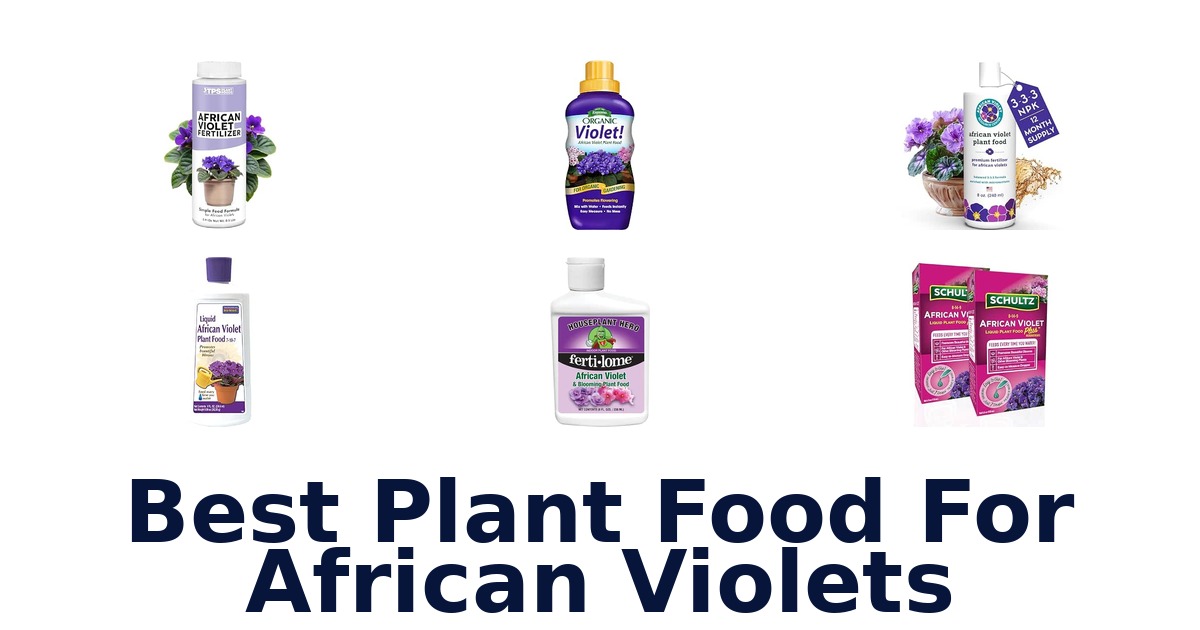
A strong African violet plant food delivers nutrients in a form and schedule you can follow consistently, making it suitable for growers who want to support healthy foliage and flowering. This roundup compares ten formulas made for African violets or indoor flowering plants, including concentrated liquids, drops, and a water-soluble powder. Options range from products with stated NPK analyses, such as Schultz African Violet Plus at 8-14-9 and Jack’s Classic 12-36-14, to products that emphasize micronutrients or gentle feeding without a listed ratio in the supplied details.
Directions also vary: some products specify feeding every time you water, while others recommend intervals of two to four weeks. Check the label and dilute each concentrate as directed; the most convenient choice depends on your watering habits and preferred format.
For a straightforward, dedicated liquid, TPS African Violet Fertilizer is the best overall choice. Its product details identify it specifically for African violets, provide an 8-ounce bottle, and give a clear dilution of 5–10 drops per quart of water with feeding every two weeks. Schultz African Violet Plus is an alternative if you want a stated 8-14-9 analysis, while Jack’s Classic 12-36-14 is the listed water-soluble powder option.
Follow each product’s own label directions rather than assuming that one feeding schedule or dilution applies to all.
Our Top Picks

Made specifically for African violets, this 8-ounce liquid provides clear directions: dilute 5–10 drops per quart and feed every two weeks.
View on Amazon Every-Watering Feed
Bonide Liquid African Violet Food
This dedicated 8-ounce liquid has a stated 7-10-7 analysis and directions to mix 1/8 teaspoon per quart for feeding every time you water.
View on Amazon Stated NPK
The 4-fluid-ounce liquid is formulated for African violets and names an 8-14-9 analysis, giving buyers a specific nutrient ratio to compare.
View on Amazon- Organic Formula Espoma Organic Violet
- Balanced NPK Houseplant Resource 3-3-3
Compare African Violet Fertilizers
| # | Product | Form | Weight | Buy |
|---|---|---|---|---|
| 1 | 1. TPS African Violet FertilizerBest Overall | Liquid | 8 oz | View on Amazon |
| 2 | 2. Bonide Liquid African Violet FoodEvery-Watering Feed | Liquid | 9.6 oz | View on Amazon |
| 3 | 3. Schultz African Violet PlusStated NPK | Liquid | — | View on Amazon |
| 4 |  4. Espoma Organic VioletOrganic Formula | Liquid | 9.6 oz | View on Amazon |
| 5 |  5. Houseplant Resource 3-3-3Balanced NPK | Liquid | 8 oz | View on Amazon |
| 6 |  6. Perfect Plants Violet DropsGentle formula with pipette | Liquid | 4 oz | View on Amazon |
| 7 |  7. Jack's Classic 12-36-14Flexible powder feeding methods | Powder | 8 oz | View on Amazon |
| 8 |  8. GardenWise 3-1-2Micronutrient-focused leaf care | Liquid | 8 oz | View on Amazon |
| 9 |  9. ferti-lome Houseplant HeroMulti-flower liquid concentrate | Liquid | 8 oz | View on Amazon |
| 10 |  10. Schultz African Violet Plus 2-PackTwo-bottle Schultz supply | Liquid | 8 oz | View on Amazon |
Detailed Reviews: Best Plant Food For African Violets
#1 · Best Overall
1. TPS African Violet Fertilizer
- Form: Liquid
- Weight: 8 oz
Best for: Two-week violet feeding routine.
Why it ranks #1: Made specifically for African violets, this 8-ounce liquid provides clear directions: dilute 5–10 drops per quart and feed every two weeks.
A two-week feeding interval gives TPS Nutrients’ African violet liquid food a clear place in a regular care routine. Made specifically for African violets, its formula targets healthy growth and flowering, while the stated dilution lets growers prepare a measured quart of feed for indoor plants.
The liquid formula is intended for African violets and is described as supporting consistent flowering, fuller blooms, and rich leaf color, making it a focused option for growers prioritizing both flowers and foliage. Its directions call for 5–10 drops per quart of water and feeding every two weeks; the listing also suggests use with every watering for best results. That range offers some dosing flexibility, but the recurring schedule calls for keeping fertilizer in the watering routine.
- Formulated specifically for African violets
- Promotes consistent flowering and fuller blooms
- Supports rich leaf color
- Directions specify 5–10 drops per quart of water
- The stated 5–10-drop range leaves growers to choose a dose within the range.
Skip it if you want a stated ounce-based dilution instead; Espoma Organic Violet! gives a half-cap-per-quart mixing direction.
This suits indoor African violet growers who want a dedicated liquid food and a regular feeding cadence. Consider whether you prefer choosing within a 5–10-drop dose range and whether feeding every two weeks fits your watering habits.
Full product details
| Brand | TPS NUTRIENTS |
|---|---|
| Item Form | Liquid |
| Item Weight | 8 ounces |
| Manufacturer | TPS Nutrients |
| Model Number | AFVIOLET8OZ-FBA-UPC-0523 |
| Additional Information | Important information Safety Information Standard fertilizer safety warnings apply. Directions 1. Shake bottle well before using. 2. Dilute 5-10 drops in 1 quart (4 cups) of water. 3. Feed plants every 2 weeks. 4. For best results, use with every watering. |
Listed on Amazon as: African Violet Fertilizer, Liquid Plant Food for More Blooms, 8 oz
View on Amazon#2 · Every-Watering Feed
2. Bonide Liquid African Violet Food
- Form: Liquid
- Weight: 9.6 oz
Best for: Bonide every-watering concentrate.
Why it ranks #2: This dedicated 8-ounce liquid has a stated 7-10-7 analysis and directions to mix 1/8 teaspoon per quart for feeding every time you water.
Bonide 106 specifies a 1/8-teaspoon dose per quart and feeding at every watering, making its application routine unusually explicit. The liquid fertilizer is formulated for African violets and is also listed for other blooming plants, so the same prepared solution can serve more than one flowering plant type.
The stated 7-10-7 analysis and 1/8-teaspoon-per-quart direction help growers measure a repeatable mix rather than estimate a dose. Feeding the solution every time you water integrates fertilizer into the usual watering workflow, while the listing also names other blooming plants as suitable recipients. Its 8-ounce liquid format provides a dedicated concentrate, but the frequent application schedule may not match growers who prefer less frequent feeding.
- 7-10-7 liquid fertilizer
- Specific 1/8-teaspoon-per-quart mixing direction
- Feed at every watering
- Listed for African violets and other blooming plants
- The directions call for feeding at every watering rather than a less frequent interval.
Skip it if you prefer a two-to-four-week feeding cadence; Espoma Organic Violet! specifies use every 2–4 weeks.
Bonide 106 fits growers who want a precise measured dose and feed during each watering, including for other blooming plants. Its every-watering schedule is the main boundary, so match it to your existing routine before choosing.
Full product details
| Brand | Bonide |
|---|---|
| Included Components | Bonide 106 Liquid African Violet Plant Food, 8 oz |
| Item Form | Liquid |
| Item Weight | 9.6 ounces |
| Manufacturer | Bonide |
| Model Number | 106 |
| Warranty Description | Warranty |
Listed on Amazon as: Bonide 106 Liquid African Violet Plant Food, 8 oz
View on Amazon#3 · Stated NPK
3. Schultz African Violet Plus
- Form: Liquid
Best for: Compact Schultz liquid concentrate.
Why it ranks #3: The 4-fluid-ounce liquid is formulated for African violets and names an 8-14-9 analysis, giving buyers a specific nutrient ratio to compare.
Schultz African Violet Plus pairs a named 8-14-9 analysis with a compact 4-fluid-ounce liquid format. That gives growers a formula identified for African violets in a small bottle, though the supplied listing offers few details about dosing or how to incorporate it into a watering routine.
The product title identifies Schultz African Violet Plus as 8-14-9 plant food, and its listed form is liquid. Those specifics make the product identity and nutrient analysis clear for shoppers comparing violet fertilizers, while the 4-fluid-ounce size keeps the bottle compact for storage. The supplied information does not give a mixing ratio or feeding interval, so buyers will need to rely on directions on the product itself to plan application and routine use.
- Identified as African Violet Plus plant food
- Lists an 8-14-9 analysis
- Liquid form can be measured into watering water
- Compact 4-fluid-ounce bottle
- At 4 fluid ounces, the bottle is smaller than Schultz’s listed 8-ounce two-pack.
Skip it if you want a stated feeding schedule and mixing dose; Bonide 106 specifies 1/8 teaspoon per quart at every watering.
This is for growers seeking Schultz’s named 8-14-9 liquid in a compact bottle. Its listed details identify the formula and form, but shoppers who need a documented dilution and feeding cadence should choose a product whose directions provide them.
Full product details
| Brand | Schultz |
|---|---|
| Item Form | Liquid |
| Model Number | 1061 |
| Additional Information | Important Information Proposition 65 Warning for California Consumers WARNING: Cancer and Reproductive Harm – www.P65Warnings.ca.gov |
Listed on Amazon as: Schultz African Violet Plus Plant Food 8-14-9, 4 fl oz (1)
View on Amazon#4 · Organic Formula
4. Espoma Organic Violet
- Form: Liquid
- Weight: 9.6 oz
Best for: Organic violet feeding routine.
Why it ranks #4: This 8-ounce concentrated liquid is described as organic and made for violets; its directions specify half a cap per quart every two to four weeks.
Espoma Organic Violet! offers organic nutrients in a concentrated liquid and gives a specific half-cap-per-quart mixing direction. That measured recipe helps violet growers prepare feed for watering, while its stated 2–4-week interval provides a flexible recurring schedule for indoor flowering plants.
The directions say to mix half a cap per quart of water and thoroughly drench the soil, translating the concentrated liquid into a straightforward soil-watering workflow. A 2–4-week interval gives growers room to align feeding with their care routine, and the product is described for violets and indoor flowering plants. The listing also calls it a bloom booster, connecting its plant nutrients with the stated goal of supporting growth and blooming.
- Organic liquid plant food for violets
- Half-cap-per-quart mixing direction
- Use every 2–4 weeks
- Also listed for indoor flowering plants
- The directions call for drenching the soil, so it is not a stated foliar-feeding option.
Skip it if you want fertilizer specified for leaf spraying; Jack's Classic 12-36-14 supports foliar or root feeding.
This is a fit for violet growers who prefer organic liquid nutrients, soil watering, and a stated 2–4-week interval. Its directions center on thoroughly drenching soil, so consider another option if applying feed directly to leaves is important.
Full product details
| Brand | Espoma |
|---|---|
| Included Components | Grass Seed, Plant Fertilizer |
| Item Form | Liquid |
| Item Weight | 9.6 ounces |
| Manufacturer | Espoma |
| Model Number | Espoma – VIPF8 |
| Warranty Description | Warranty |
| Additional Information | Important information Safety Information See Packaging Ingredients plant nutrients Directions Mix 1/2 cap of Espoma Organic Violet! per quart water. Water plants thoroughly, ensuring soil is well-drained. Use every 2-4 weeks for best results. |
Listed on Amazon as: Espoma Organic Violet! 8-Ounce Concentrated Plant Food – Plant Fertilizer and Bloom Booster for All Violets and Indoor Flowering Plants. Promotes Vigorous Growth and Blooming.
View on Amazon#5 · Balanced NPK
5. Houseplant Resource 3-3-3
- Form: Liquid
- Weight: 8 oz
Best for: Every-watering violet feeding.
Why it ranks #5: Made specifically for African violets, this 8-ounce liquid has a 3-3-3 NPK analysis and is described for use with every watering.
A 3-3-3 NPK formula intended for use every time you water makes this Houseplant Resource Center food a fit for growers who prefer frequent, steady feeding. It is made specifically for African violets, with the supplied description emphasizing nourishment without risk of burn when used as stated.
The listed 3-3-3 analysis gives shoppers a clear nutrient balance to compare, while the description frames the product as a steady nutrient supply for African violets. Use with every watering folds feeding into an existing routine instead of adding a separate calendar interval. The product is specifically made for violets, and its supplied description says it can be used every time without risk of burning; shoppers should still follow the product directions and handling cautions.
- 3-3-3 NPK liquid plant food
- Made specifically for African violets
- Described for use with every watering
- Description says routine use avoids risk of burn
- Every-watering use requires fertilizer to be incorporated into each watering session.
Skip it if you prefer feeding only every few weeks; Espoma Organic Violet! lists use every 2–4 weeks.
This suits growers who want a violet-specific liquid and are comfortable incorporating fertilizer into every watering. The frequent routine is the key fit consideration; choose a less frequent schedule if you prefer feeding only periodically.
Full product details
| Brand | HOUSEPLANT RESOURCE CENTER |
|---|---|
| Item Form | Liquid |
| Item Weight | 8 ounces |
| Manufacturer | Houseplant Resource Center |
| Model Number | E |
Listed on Amazon as: African Violet Fertilizer, 3-3-3 NPK Liquid Plant Food for Blooms, 8 oz
View on Amazon#6
6. Perfect Plants Violet Drops
- Form: Liquid
- Weight: 4 oz
Best for: Gentle formula with pipette.
Why it ranks #6: This dedicated 4-ounce liquid comes with a pipette and is described as a gentle formula intended to avoid negatively affecting roots.
A gentle liquid formula and included pipette distinguish Perfect Plants African Violet Fertilizer for growers who want to measure drops rather than handle fertilizer spikes. Its listing says the formula is intended to nourish blooms, foliage, and roots while avoiding the root concern associated with spikes and fertilizer sticks.
The product is described as having essential nutrients for flower blooms, foliage growth, and a robust root system, so it speaks to growers caring for the whole violet rather than flowering alone. Its gentle formula is presented as a response to root concerns associated with spikes and fertilizer sticks. The included pipette supports measured liquid application, while the 4-ounce bottle offers a smaller format than the listed 8-ounce choices.
- Gentle formula intended for African violets
- Targets blooms, foliage, and root development
- Includes a pipette for measuring liquid
- Liquid alternative to fertilizer spikes and sticks
- The 4-ounce bottle contains less product than the listed 8-ounce formats.
Skip it if you need a listed feeding frequency and dilution amount; TPS Nutrients African Violet Fertilizer gives drop-per-quart directions and a two-week schedule.
This fits violet growers who value a gentle liquid formula and a pipette for measured use. Its 4-ounce size and lack of a supplied schedule make it less suited to buyers prioritizing a larger bottle or clearly stated routine directions.
Full product details
| Brand | PERFECT PLANTS |
|---|---|
| Included Components | One Bottle with pipette |
| Item Form | Liquid |
| Item Weight | 4 ounces |
| Manufacturer | Perfect Plants |
| Model Number | African-Violet-Fertilizer-Drops-4oz |
| Additional Information | Important information Ingredients NPK |
Listed on Amazon as: Perfect Plants African Violet Fertilizer, 4 oz, Liquid Bloom Food Drops
View on Amazon#7
7. Jack's Classic 12-36-14
- Form: Powder
- Weight: 8 oz
Best for: Flexible powder feeding methods.
Why it ranks #7: The 8-ounce powder is specifically for African violets, lists a 12-36-14 analysis, and can be used for root or foliar feeding.
Jack’s Classic combines a 12-36-14 analysis with both foliar and root feeding options, giving African violet growers flexibility in how they apply fertilizer. The water-soluble powder can also be used in a continuous-feed system, which suits routines that favor prepared solutions over a liquid concentrate.
The listed analysis is associated with deep green foliage, stocky stems, root and bud development, and colorful blooms across African violet varieties. Water-soluble powder must be measured and mixed with water, and the included measuring spoon supports that preparation step. Foliar or root feeding provides alternatives for application, while continuous-feed compatibility offers another workflow. The description also states gradual nutrient release for up to four months, a useful maintenance detail for growers planning feeding frequency.
- 12-36-14 analysis for African violets
- Water-soluble powder mixes with water
- Supports foliar, root, or continuous feeding
- Description states gradual nutrient release for up to four months
- The powder must be measured and mixed with water before feeding.
Skip it if you want a ready-to-use liquid rather than a powder to mix; Bonide 106 is a liquid African violet fertilizer.
This suits growers who want several application methods and are comfortable measuring and mixing water-soluble powder. Its 12-36-14 analysis and stated gradual release are relevant, but the powder format adds a preparation step before feeding.
Full product details
| Brand | Jack's Classic |
|---|---|
| Included Components | 1 |
| Item Form | Powder |
| Item Weight | 8 ounces |
| Manufacturer | JR Peters |
| Model Number | 51208 |
| Additional Information | Important information Safety Information B007BVNNI2 |
Listed on Amazon as: Jack's Classic 12-36-14 African Violet Water-Soluble Fertilizer, 8oz
View on Amazon#8
8. GardenWise 3-1-2
- Form: Liquid
- Weight: 8 oz
Best for: Micronutrient-focused leaf care.
Why it ranks #8: This 8-ounce liquid is formulated for African violets, lists a 3-1-2 ratio and micronutrients, and provides a dilution of two tablespoons per gallon.
GardenWise combines a 3-1-2 analysis with essential micronutrients in a liquid concentrate for African violets. Its description puts particular emphasis on leaf color, including support for natural vibrancy and prevention of yellowing, making foliage appearance a central reason to consider this formula.
The 3-1-2 analysis gives the concentrate a defined nutrient profile, while the listed micronutrients connect the formula to the stated aim of restoring leaf vibrancy and preventing yellowing. Its violet-specific positioning also targets root and leaf health, which may appeal to growers monitoring foliage as well as general plant condition. The directions specify two tablespoons per gallon of water, so users can prepare a larger batch for watering rather than measure each pot separately.
- 3-1-2 liquid concentrate
- Contains essential micronutrients
- Description targets leaf vibrancy and yellowing
- Directions specify two tablespoons per gallon
- The concentrate must be diluted at two tablespoons per gallon before use.
Skip it if you want a drop-based measure for a quart batch; TPS Nutrients African Violet Fertilizer specifies 5–10 drops per quart.
GardenWise fits violet growers focused on foliage color who are comfortable mixing a gallon-based batch. Its stated dilution is two tablespoons per gallon, so consider whether that batch size fits the number of plants you water.
Full product details
| Brand | GARDENWISE |
|---|---|
| Included Components | Bottle of 3-1-2 Liquid African Violet Fertilizer Concentrate with Micronutrients |
| Item Form | Liquid |
| Item Weight | 8 ounces |
| Manufacturer | Summit Sales Company LLC |
| Additional Information | Important information Safety Information May be harmful if used undiluted. Keep out of reach of children and pets. If ingested, seek medical attention immediately. Directions Simply mix 2 tablespoons of fertilizer with each gallon of water, seamlessly integrating into your regular watering routine. |
Listed on Amazon as: GARDENWISE 3-1-2 African Violet Fertilizer for Indoor Plants: Liquid Fertilizer with Essential Micronutrients Drops – Plant Food for African Violets (8 oz)
View on Amazon#9
9. ferti-lome Houseplant Hero
- Form: Liquid
- Weight: 8 oz
Best for: Multi-flower liquid concentrate.
Why it ranks #9: The 8-ounce liquid is labeled for African violets and other flowering plants, with an 8-10-8 analysis and directions allowing regular or periodic feeding.
Houseplant Hero’s 8-10-8 concentrate is listed for African violets and flowering plants broadly, making it a practical option for a mixed indoor collection. Its liquid form is meant to be diluted with water, and the supplied directions allow either every-watering use or a less frequent monthly routine.
The 8-10-8 analysis identifies the concentrate for shoppers comparing nutrient formulas, while its stated use across flowering plants can simplify feeding when violets share space with other bloomers. The listing permits use every time you water or once or twice per month, letting growers choose between routine integration and periodic feeding. Because it must be diluted, application requires mixing with water rather than pouring the concentrate directly onto plants.
- 8-10-8 liquid concentrate
- Listed for African violets and flowering plants broadly
- Allows every-watering or once-to-twice-monthly use
- Dilution-based format can be mixed into watering water
- The concentrate must be diluted with water before application.
Skip it if you want a product specifically described for African violets rather than flowering plants broadly; Perfect Plants African Violet Fertilizer is violet-focused.
This suits growers who feed African violets alongside other flowering plants and want to choose a frequent or monthly routine. It requires dilution, so it is not the right fit if you want a ready-to-use liquid.
Full product details
| Brand | ferti-lome |
|---|---|
| Included Components | Houseplant Hero African Violet & Blooming Plant Food – 8-10-8 House Plant Fertilizer (8 Ounces) |
| Item Form | Liquid |
| Item Weight | 8 ounces |
| Manufacturer | ferti-lome |
| Model Number | 18031 |
| Warranty Description | Warranty |
| Additional Information | Important information Safety Information Keep out of reach of children and pets. Avoid contact with skin and eyes. Use in a well-ventilated area. In case of accidental contact, rinse thoroughly with water. If swallowed, seek medical attention immediately. Directions Dilute 1/4 tsp per quart of water and apply every time you water or once or twice per month. |
Listed on Amazon as: Houseplant Hero (18031) African Violet & Blooming Plant Food 8-10-8, 8 oz
View on Amazon#10
10. Schultz African Violet Plus 2-Pack
- Form: Liquid
- Weight: 8 oz
Best for: Two-bottle Schultz supply.
Why it ranks #10: This two-bottle listing supplies two 4-ounce liquids with an 8-14-9 analysis, but the supplied details offer less use-direction information than higher-ranked options.
Two 4-ounce bottles give Schultz African Violet Plus a ready-to-store supply of its 8-14-9 liquid formula. The fertilizer is described for African violets and other indoor flowering plants, so one product can serve violet care alongside other flowering houseplants.
The 8-14-9 formula is identified as micronutrient-enriched, with the listing connecting those nutrients to roots and lush foliage. Its stated use for African violets and other indoor flowering plants gives growers a wider application scope than a violet-only label. The two-bottle pack provides 8 ounces total in separate 4-ounce containers, making it possible to keep one bottle in use and another stored, though the supplied facts do not specify a dilution schedule.
- Two 4-ounce bottles provide 8 ounces total
- 8-14-9 African Violet Plus formula
- Contains micronutrients
- Listed for African violets and other indoor flowering plants
- The supplied listing does not state a mixing ratio or feeding interval.
Skip it if you need a stated dilution and feeding cadence; Espoma Organic Violet! specifies half a cap per quart every 2–4 weeks.
This suits growers feeding African violets and other indoor flowering plants who value a two-bottle supply and micronutrients. Check that the product directions provide the application details you need, since the supplied listing does not give a dose or interval.
Full product details
| Brand | Schultz |
|---|---|
| Included Components | Schultz African Violet Plus Liquid Plant Food 8-14-9, 4 oz, (2 Pack) |
| Item Form | Liquid |
| Item Weight | 8 ounces |
| Manufacturer | SPF44900 |
| Model Number | SPF44900 |
| Warranty Description | Warranty |
| Additional Information | Important information Ingredients micronutrients |
Listed on Amazon as: Schultz Liquid Plant Food Fertilizer – African Violet Plus, 8-14-9-4 oz (2 Pack) – Plastic
View on AmazonAvoiding fertilizer buildup in violet pots
Fertilizer buildup is a practical risk to manage by measuring concentrates carefully and following the product’s own dilution directions. The listed products do not all use the same dose: TPS African Violet Fertilizer calls for 5–10 drops per quart, Bonide Liquid African Violet Food specifies 1/8 teaspoon per quart, and GardenWise 3-1-2 gives a dose of two tablespoons per gallon. Those amounts are not interchangeable.
Several labels describe frequent feeding, including Bonide Liquid African Violet Food and Houseplant Resource 3-3-3, while Espoma Organic Violet recommends use every two to four weeks. That difference makes it important to choose a schedule before adding fertilizer to routine watering.
Avoid combining products or increasing concentration based on another formula’s directions. If you are unsure how a plant responds, use the selected product’s label as the authority and observe the plant rather than assuming more frequent or stronger feeding will improve growth.
Liquid concentrate or soluble powder?
Liquid concentrates and water-soluble powder can both be mixed with water, but they call for different measuring and application routines. Most products here are liquids, including Schultz African Violet Plus and Perfect Plants Violet Drops; the latter includes a pipette. Jack’s Classic 12-36-14 is the only listed powder, and its product details describe both root and foliar feeding.
That flexibility may suit someone who wants those application options, while a liquid may better suit someone who prefers a bottle-based concentrate. Do not infer that every liquid is used in the same way: the products list different dilution quantities, and their feeding intervals differ.
Also, the listed NPK analyses vary substantially, from 3-1-2 for GardenWise 3-1-2 to 12-36-14 for Jack’s Classic 12-36-Compare the stated analysis and package directions before switching formats; product form alone does not establish how much to apply or how often.
How to Choose African Violet Plant Food
African violet-specific formulation
Look for a product that explicitly names African violets when you want a formula selected for this plant. Dedicated options include TPS African Violet Fertilizer, Bonide Liquid African Violet Food, and Schultz African Violet Plus; ferti-lome Houseplant Hero also names African violets alongside other flowering plants. Espoma Organic Violet is labeled for violets and indoor flowering plants.
These products differ in how narrowly their stated use is framed, not in verified performance. Choose a dedicated violet product if that is your main plant-care need.
If you also want to use the food on other flowering houseplants, a label that explicitly includes flowering plants may fit that broader routine. Always check the complete product label for any plants or application methods it covers.
Nutrient analysis and included details
Choose whether a stated NPK ratio matters to you, since the listings provide different levels of nutrient detail. Schultz African Violet Plus lists 8-14-9, Bonide Liquid African Violet Food lists 7-10-7, Houseplant Resource 3-3-3 lists 3-3-3, GardenWise 3-1-2 lists 3-1-2, and Jack’s Classic 12-36-14 lists 12-36-Other supplied product details emphasize features such as micronutrients or a gentle formula rather than giving a complete ratio.
If you prefer to compare a printed analysis, select one of the products with a stated NPK. If you are focused on an added detail such as micronutrients, compare the product description and package information instead.
These ratios describe the listed analyses; they do not establish a universal best formula.
Feeding schedule and measuring
Pick a product whose directions fit how often you water and how precisely you want to measure. TPS African Violet Fertilizer specifies 5–10 drops per quart and feeding every two weeks; Espoma Organic Violet calls for half a cap per quart every two to four weeks. Bonide Liquid African Violet Food directs users to mix 1/8 teaspoon per quart and feed every time they water.
Houseplant Hero allows use every time you water or once or twice per month, while GardenWise 3-1-2 specifies two tablespoons per gallon. Those differences make the label schedule a key selection factor.
If you want a stated routine, choose a product with clear directions that match your habits. If you tend to water frequently, pay close attention to whether the instructions permit each-watering use and how the concentrate must be diluted.
Which African violet plant food should I choose?
Choose TPS African Violet Fertilizer if you want a dedicated liquid with a clear two-week schedule and a small, stated dose per quart. For an every-watering routine with a specific dilution, consider Bonide Liquid African Violet Food; Houseplant Resource 3-3-3 is another listed option described for each watering. If comparing a printed NPK analysis is your priority, Schultz African Violet Plus lists 8-14-9, while Jack’s Classic 12-36-14 offers a powder that can be used for root or foliar feeding.
Choose Espoma Organic Violet if its organic description and two-to-four-week schedule suit your routine, or Perfect Plants Violet Drops for its pipette and gentle-formula description. For any choice, follow its own label: dilution amounts and feeding schedules are not interchangeable.
Related Buying Guides
Frequently Asked Questions
How often should I fertilize an African violet?
Follow the fertilizer’s own label, since feeding schedules differ. TPS African Violet Fertilizer specifies feeding every two weeks, while Espoma Organic Violet lists a two-to-four-week schedule. Other products may give different directions, so don’t transfer one product’s schedule to another.
Should I apply African violet fertilizer to the leaves or the soil?
Use the application method stated on the product label. Jack’s Classic is described as usable for root or foliar feeding, but that does not mean every fertilizer is suitable for leaves. If the directions specify watering or root feeding, apply it that way rather than spraying foliage.
What can cause fertilizer buildup or leaf damage on African violets?
Using a stronger dilution or more frequent feeding than the product directs can increase the chance of fertilizer buildup or damage. Product directions differ, so measure and schedule each one according to its label. Avoid assuming that another fertilizer’s dilution or routine will work for your chosen product.
What does an NPK analysis tell me when comparing fertilizers?
An NPK analysis gives the listed proportions of nitrogen, phosphorus, and potassium. Schultz African Violet Plus lists 8-14-9, and Jack’s Classic lists 12-36-Compare those printed analyses if that information matters to your choice, but use the product’s own directions for dilution and feeding.
How should I choose between a liquid and a powder fertilizer?
Choose based on the form and routine that suit you, while following the label. TPS is a dedicated liquid with a stated two-week schedule and dose per quart; Jack’s Classic is a water-soluble powder described for root or foliar feeding. Do not assume their application directions are interchangeable.
Final Words
For a straightforward dedicated liquid with a stated dose and feeding schedule, choose TPS African Violet Fertilizer and follow its label. If you prefer a listed powder that supports root or foliar feeding, consider Jack’s Classic; Schultz African Violet Plus is an alternative with a printed 8-14-9 analysis. For any option, use its own dilution and schedule rather than carrying directions over from another product.